Case studies
Case studies
1. Interview: Vincent Longuemare
We live in the European culture that was influenced by Christianity for centuries. Our work is often unconsciously influenced by the environment in which we live. Do you think that it would be hard for a European lighting designer to work, for example, in Asia?
When I worked in Japan, for instance, I had to learn the symbolism of colors, which is completely different from ours. For example, the color that symbolizes the spring in Japan is the color of cherry blossoms. This pink may seem dim to us, because the color of spring is bright yellow, green or orange for us. But I think that anyone can adapt to these cultural specifics. Rather, it can be hard to get used to the different organization of work. Almost all cultures of the world are available to us for several generations, although in superficial honeycomb of images and words: if you want to do your job well, you have to have an open mind, go to the streets and watch and watch until your eyes will cry with fatigue.
Do you use some kind of symbolism, characters in your work, or do you work instinctively?
It’s a big fight between intuition and knowledge. Once you begin to think that you know something, you can be a goner in the next moment. At the same time, it is the reason why people want to work with you. They believe that you are good and you know all the solutions. If you start thinking about yourself that you have the knowledge and solutions, you start to repeat yourself. Some of my colleagues do the same design already for twenty five years. This may be convenient to some directors and productions, because they know what they can expect. However, I believe that each performance is a new experience and therefore we should look for new ways and opportunities. In this conflict, I choose intuition, groping in the dark and discovering the light is much more fun. I don’t mean that in the morning I go to the theater and say to myself, “so how we do it tonight?” For me, groping in the dark means a research and study of new possibilities, preparation. Then I come to the theater with a clear vision and definition of what I want to do.
Could you list in five words, what is the essence of lighting design for you?
Darkness / Black
active eye
perception of space and body
contrast
technical knowledge
And if you should explain it more?
Whenever I start to teach a group of students, I use the same words to express the essence of lighting design: we are not able to see the light as such. We see it through the objects it affects. As it moves through the space, it enters into contact with objects and bodies. One of the best ways how to be able to perceive light is to realize its contrast with the darkness. That is the most basic contrast. There is nothing and suddenly everything comes to life, because I see it standing out from the darkness. The sight captures and interprets light stimuli to us. We cannot think about light, if we do not think about darkness as well.
The way we see and perceive is the next step. A better ability of observation and perception is required from a lighting designer. A lighting designer must be able to transfer the shape, structure and the presence on the stage into the general visual scheme through the light. Space, props, costumes, body, but also the direction of looks of the eyes or the color of the skin – everything that happens on stage, must be seen and discovered.
The best way to achieve this is to create a contrast on the stage, which allows the spectator’s eye to perceive what is happening. From the smallest detail to the dramaturgical structure of the performance. It’s like creating a variety of visual perception and differentiation: to organize the visual field into a general structure and within that, to organize (to the viewer) the movement of the eyes.
Technical knowledge is, of course, indispensable, it allows you to work faster and more accurately. However, I believe that it is necessary that technical knowledge would be in the service of poetics and creation, not vice versa.
Are the lighting design in architecture and lighting design in theater the same professions? Do they have something in common?
They can be created by the same person, but it isn’t the same profession. Dance and theater serves to a world that is ephemeral, intangible and illusive. To a world that is built again and again, represented to the spectators and then disappears. Only some pictures will remain in the mind.
Architectural lighting is challenging due to the actual volume of material, of building, of something that is permanent. It has to be said here that a capable designer can be naturally able to achieve excellent results even in the architectural lighting. In the architectural lighting, one must take into account various constraints (rules, safety), durability of the material and the like. Architects, designers, engineers and firemen hold together and sometimes you have to respect the rules according to which the functionality has the priority over the “beautiful”.
How do you explain the fact that in recent years, there appears to be a growing interest in lighting and lighting design, not only in the theater world, but also in architecture and other arts?
It seems that we find ourselves once again in an age, which is ruled by visual communication: Our fascination with images (in a broad sense of the word) is like a mother’s breast from which we greedily suck the milk of information. In the society, there is a distinctive need for veiling the world with images, to understand and explain the world with images rather than words. Some people seek the truth of history or politics through the images. Most of them creates images in order to hide what is not to be seen. Images that emerge from any kind of power to create a nice two-dimensional world. I assume that interest in the visual creation, by which we can control the world, means that we need technologies to build a vision of the world. Fortunately, I still believe that theater is a place for creation of images. It’s one of the few places where people meet in direct contact, face to face, where you can search for the truth of moments, the truth of humanity. It may be that not that much money flows through the theater world as in other fields of human activity and that protects it against industrial production of images, which has always only one goal: to make money and lie to people in order to maintain power.
The general interest in architectural and public lighting follows from industrial innovation and creation of new markets. There is always someone who wants a new toy or desire to be modern. I believe that we live in difficult times, and the light is associated with life, birth and faith, with the expectation of a new day, but also with the end. Maybe we seek hope through the light: will there appear better days in better light?
Can you describe a typical content of a day of a lighting designer?
When I was young, I was able to spend twenty four hours a day in the theater until I found the right way, there was no daily program, there were only questions, the stage in front of you and possible solutions. Currently, my program is divided into two main parts: the time I spend creating and inventing a lighting design at home in the studio, and the time I spend preparing and installing the lights before the performance. During the first phase, I go to the rehearsals, I discuss with set designers, costume designers and directors. I’m trying to get as much information as possible. I study the scenes or get inspiration from my life and the events around me. During the second phase of preparations, I usually spend twelve hours a day in the theater. I come at eight o’clock in the morning and leave around ten or eleven at night. During the technical preparations, I give a lot of time to building light changes. I try to make the lighting seem natural and live. I like a lighting design, which blends with the performance and helps to complete the story and the time is a single tool for creation of a light dramaturgy.
I mostly come to the theater as the first one- I enjoy the moment when I enter the empty, silent theater, night slowly sails away, technicians begin to come and smell with the first morning coffee – and I am the last to leave. I promised myself that I will be a sound engineer in my next life – the last one who comes and first one who goes.
Your main fields are a theater lighting and set design. When you create a scene, do you imagine it already lighted, or do you invite colleagues to help you to create the light design?
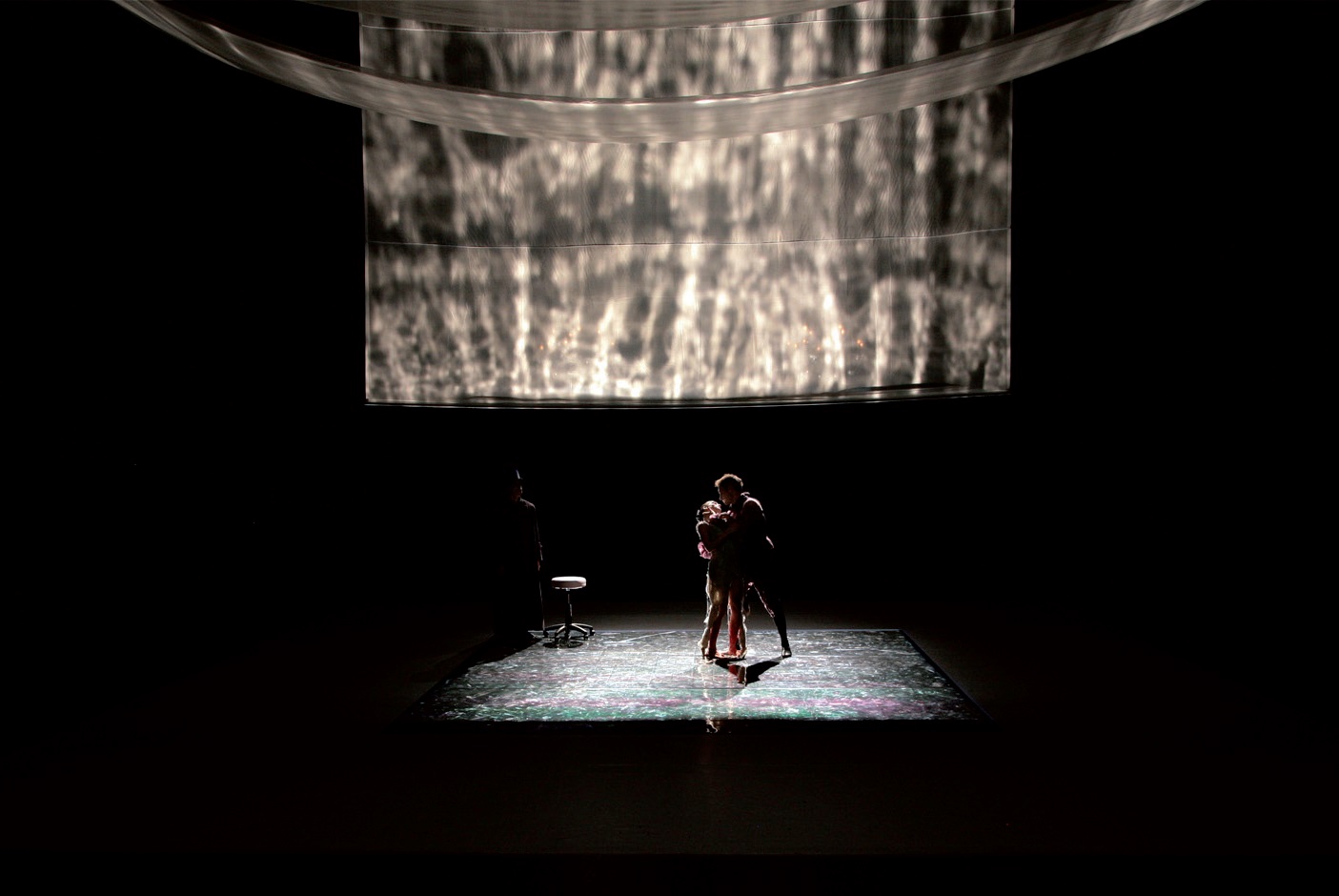
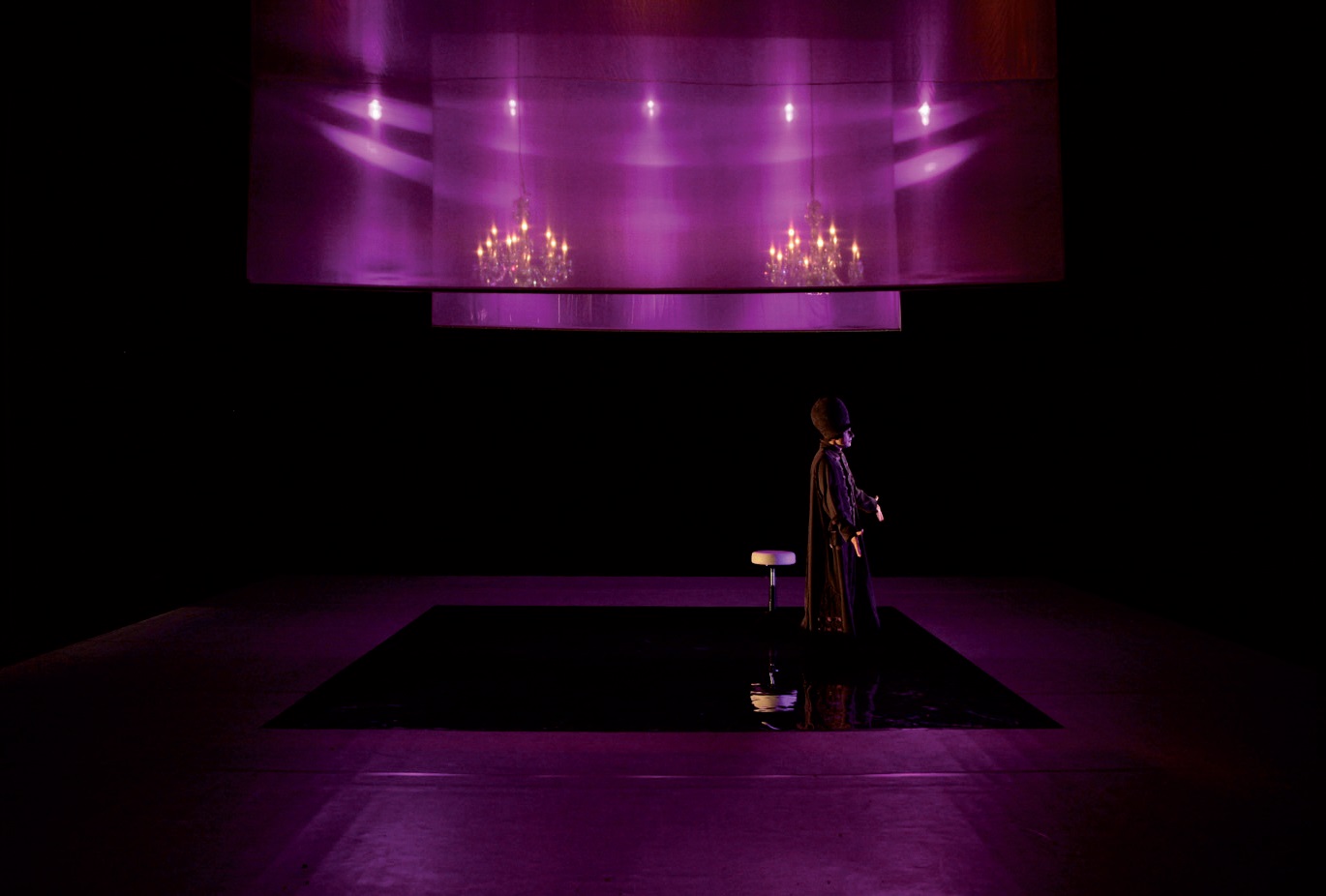
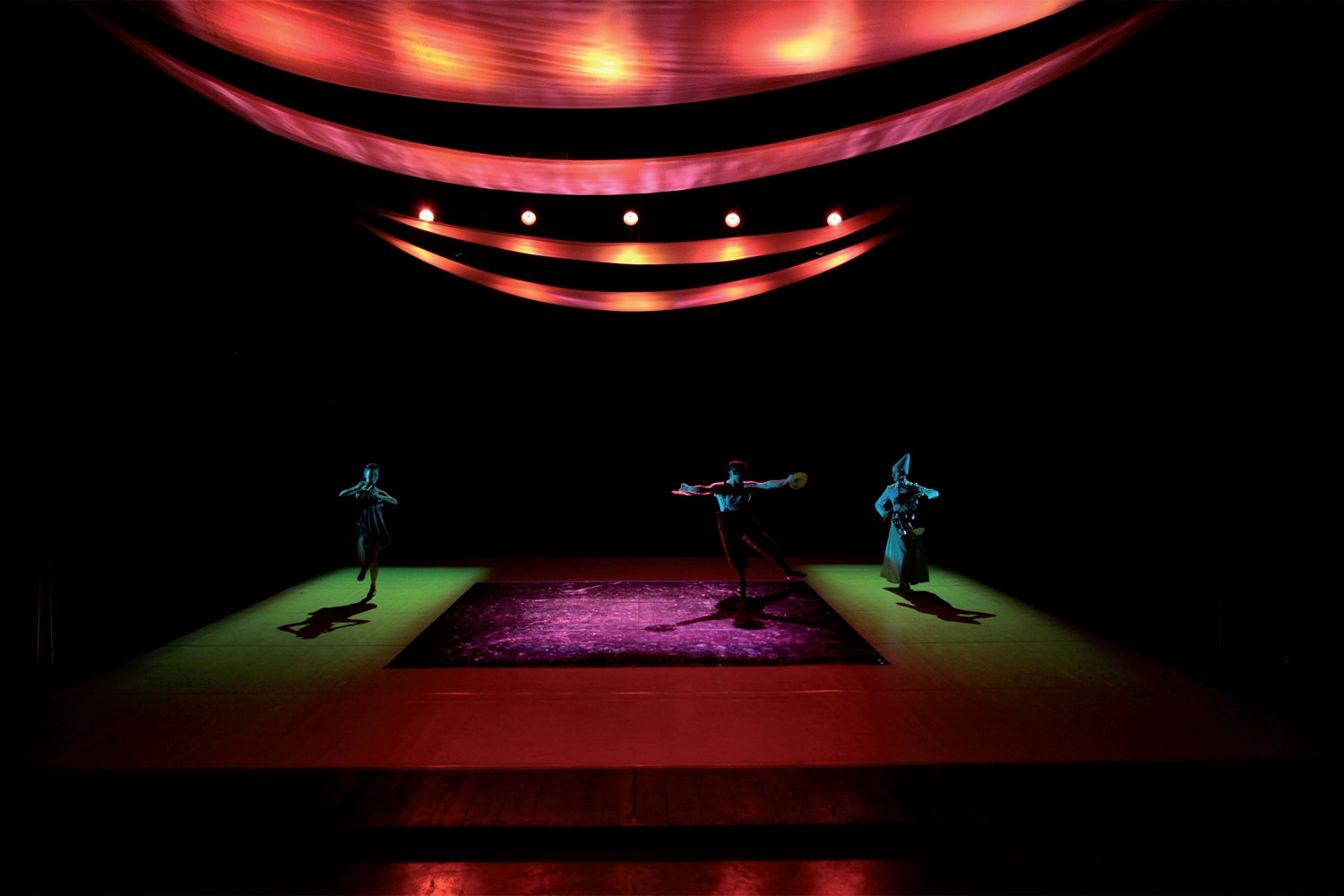
I have started dedicating myself to the set design about ten years ago. I was partly inspired by those morning moments when you enter the empty silent theater. The space in front of you it is not yet burdened by any human activity, and you can fully perceive it. I was also dissatisfied with the approach to the production of scenography. It was annoyed by a general practice of artists who ignore the individuality of space and just builds and builds, inundate the space with walls, structures, props. I have always had a feeling that uniqueness of the space has to be respected when creating performances. Makers of stage sets should be focusing on looking for ways how to work with it instead of overfilling the area. I believe that in every performance there are direct relationships between bodies, voices, eyes and space as such. This mutual interaction between individual elements should be searched for and consolidated during the creation of each performance. Light can also be the structural element for building “architecture” of space. When creating a stage set, I closely work with the director, I use all the actions and movements, which are contained in the performance. I start with lighting, then I define the spatial layout and the invisible lines in which the voltage flows, I assemble all elements of the performance so they correspond in best way with the already created lighting.
So far, I haven’t had the opportunity to see my stage set be lighted by someone else. I think they invite me to do the set design and lighting design also for the reason that to the production would save money!
The remaining part of the interview is available here.