
2.3 Theatre lighting
2.3 Theatre lighting
Development of theatre lighting
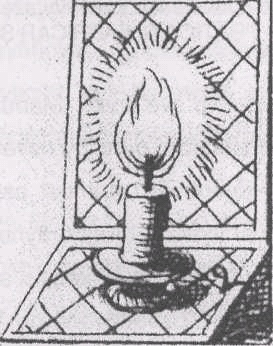
The prehistory of the modern day lighting dates back to the Renaissance with the emergence of a permanent theater building. Oil lamps or candles served there and once in a while there were attempts to improve the quality by fixing a reflector to them or changing the color by mounting colored glass in front of the source.
A large source for our understanding of the theater in 17th century is the book Pratica di fabricar scene e macchine ne‘ teatri by Nicola Sabbatini, which was published in 1638, or Architectura navalis by Joseph Furttenbach the Elder from 1629. There are many examples of fabrication of scenic effects next to several insights about lighting. The oil lamps were improved by mounting a glass chimney, but still there had to be many of them and the actors had to wear white clothing and be with white masked faces. The number could reach astonishing amount as so happened by opening of Royal Court Opera in Berlin, where 1300 candles with reflectors were used by its opening.
Argand Lamp

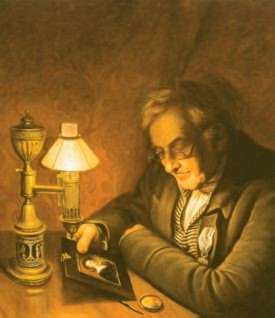
In 1783/4, Ami Argand, a Swiss chemist, developed the principal of using an oil lamp with a hollow circular wick surrounded by a glass chimney. The wick and chimney improved the combustion of the oil and resulted in a brighter light with less smoke. This was the first real advancement in lamp technology in thousands of years. The Argand lamp required much more fuel than did conventional oil lamps, limiting their use to the rich, and to public places.
At the beginning of the 19th century stages were illuminated by Argand oil burners. They were provided as footlights, stage side lights and by overhead chandeliers. For stage use, the glass chimney was often made from colored glass. During the 19th century, gas light was being developed and flourished. Other sources such as the arc lamp and the lime light were also developed and put to use on stage.
Gas Lamp
It was the introduction of gas lighting to the theatre that began the first real advance in theatre lighting. Gas was manageable and controllable. Centralized remote control systems were developed, usually in wings, backstage. Footlights and wing lights could be dimmed or brightened. It had higher luminance and the light was more brighter with stable intensity. It enabled to evenly illuminate large areas. It had its dangers as well. They could easily start a fire, they were smelly and smoky. From time to time, the gas poured into area without burning and subsequently when ignited, a blast could destroy not only the stage, but the entire building as well. If we have only a brief look at the history of various theaters, we notice that many of them were consumed by fires. Its emission caused breathing problems both to actors as to audience.
The first general use of gas street lighting took place in London in 1814. By 1823 nearly 40,000 lamps had been installed in 215 miles of London streets. In 1820, Paris adopted gas street lighting.
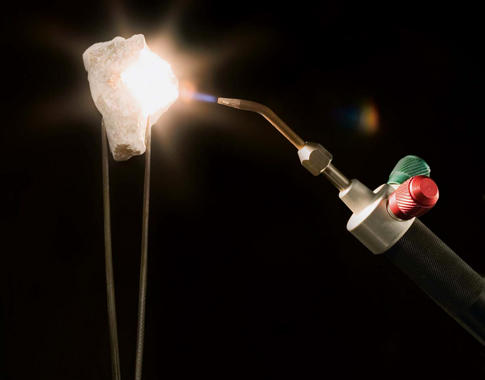
Limelight was in widespread use in theaters throughout the 19th century until it was replaced by Arc lamp. Its firs use is credited to Covent Garden Theatre in 1837.
Arc lamp
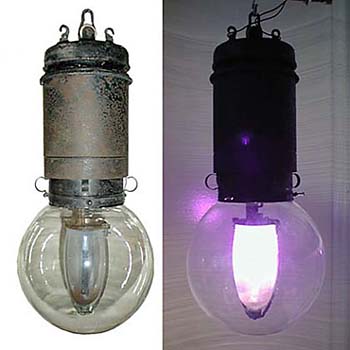
Arc lamp was the first practical electric light. Because electricity lacked all the dangers of the gas lighting, the transition was rather quick and by the beginning of the 20th century, the theaters were already overwhelmingly quipped by electricity. Because electricity lacked all the dangers of the gas lighting, the transition was rather quick and by the beginning of the 20th century, the theaters were already overwhelmingly quipped by electricity. With it, the rapid development of theater lighting came into existence.

Out of the Dark: The history of illumination