3.2 Timing
3.2 Timing
Theatre is a process that takes place either in real-time or abstract time and has its own laws as such. Unlike the architecture, the stage lighting is dynamic and the timing is one of its key factors. With a different timing of changes, which transmits the action in the scene from space to space or from mood to another situation, that is the way of changing the meaning or even move the plot in the time of staging. Although it is possible to make changes in the range from the cut (no time) to changes in the level of several tens of hours, but this is of course meaningless in a performance which is in two hours long. Exactly the timing is a mean that is often neglected and therefore it is possible to witness a “disco” and to watch one quick change after another without any reason. For the topic of simulation of weather, it is suitable to choose changes of slower nature, often in a matter of minutes. During observation of what occurs outside, it is evident in most of the cases that weather changes slowly as well as the daytime and they are not faster in most of the time then in the mentioned range of minutes.
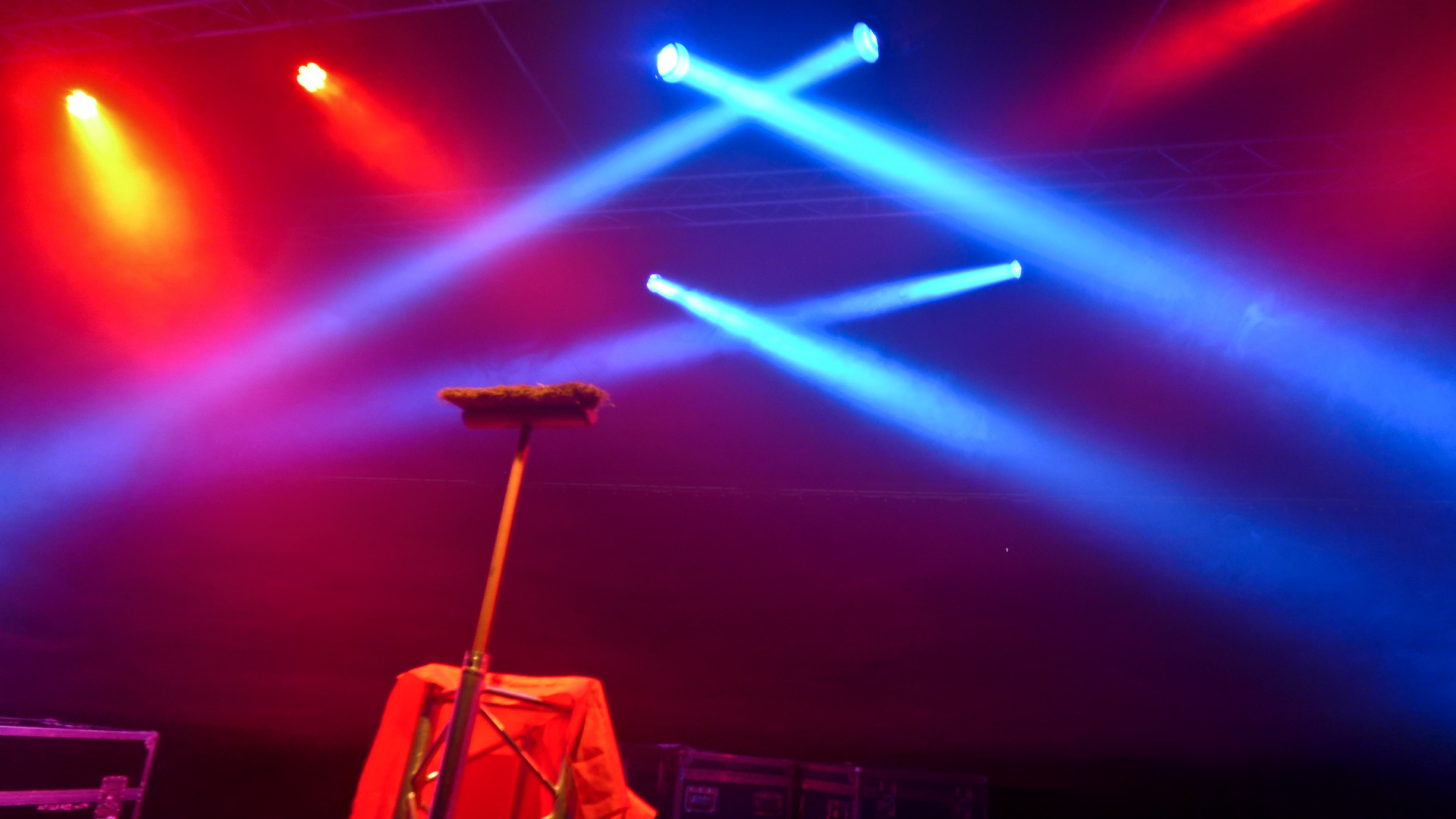
The resulting timing of changes depends on the dramaturgy of the performance and it is hard to imagine that the audience would enjoy a half-hour change without anything else happening on the stage. Even so these transition changes that concerns changes of weather shouldn’t be shorter that one minute. The present day control with computers allows the timing also to be differently phased. For that, the changes in the intensity of instruments that are connected into the simulation of weather could be timed in another way, even independently of the action on the stage. For example, the backdrop may slowly change color from pale blue to red during one scene and in the meantime, the other lights can react to something else during the ongoing conversion in the intensity from pale blue of instruments that are being switched off into the red of the ones that are being switched on. Timing of fading and incoming changes may be again different and also including the so-called delay of individual cues. Other options of dynamics of change can be achieved by this. Any change is good when it is slow, because a rapid change would highlight something in the scene. Various effects, which are available in a large number today in the digital age, should also be in its individual cues and transitions rather slow. If there isn’t projection technology available, effects of weather can be created by instruments, by its steady switching on and off, or even using special effect instruments – they can project through an animation wheel between the source of light and optics of instruments something like rain (falling drops), various flickering (imitation of forest branches), clouds etc. Given the cost of this type of animation wheel, it is often necessary to be satisfied with conventional lights.





3.3 Fading in, fading out
If there is the intention to shift the attention of spectators from the area in front left into the front right, a cue would be used, in which intensity of the instruments focused to the right increases and those directed to the right decrease. Such a transition is made best when the right side is lit quickly, whereas the left fades out so slowly that it wouldn’t be caught by spectator’s attention. Rapid changes attract attention. For instance, fading in can endure 3 seconds while fading out 12 seconds.
It may so happen that while even by slow fading out, the actors can say an important replica in the dark. In such a case, fading out can be delayed with a “delay” button at the console so fading out would start after a certain period of time that was set to the computer. Modern lighting consoles allow many ways of timing.
4. Implementation
The process of formation of a performance
At large venues, the order of what is going to happen is clearly given and planned. Time is scarce and very expensive. In the Czech Republic, it is usual to follow such a schedule: One to two set design rehearsals, sometimes three, if the performance is complex and large. During these rehearsals, the scenery is built into more of less final form, then it is lit and cues can be programmed. It’s simple math. Opera or dance performances tend to have approximately two to three hours of actual time. On average, about 150 cues are programmed. If each is created five minutes, then it is necessary to have twelve hours of actual time. One fact follows from this: lighting design has to be ready a long time before anything is about to happen on the stage. There is no time to think or to experiment. A lighting designer has to have not only a comprehensive idea, but he has to know exactly as well what means would be used to implement it. But how to get results in practice? There are many options, but one should develop a system and stick to it.
The exact appearance of the lighting design should be materialized into a so called light plot – a plan of lights, which indicates how many of which lights are located where: light types, their plugging in, position, filters, partially also focus. During preparation of the plan, a careful consideration should be given about fly bars, which are usually already occupied by set pieces and masking. It is necessary to calculate well with the height of fly bars and it is reasonable to have it discussed in advance with a lighting director and resident set designer. If moving heads are to be used, it is very much convenient to acquire as much information as possible about the given types of them. If the follow spots (tracking instruments) are to be employed, their positions and methods of use need to be specified in details. In short, it is advantageous to arrange the maximum of possible in advance. In the ongoing negotiation, it is good to inform and explain to partners, what is going to serve to what and to clarify why is that. That naturally often induces discussion that often contain the question of technical feasibility, respectively time consumption. No advice should be neglected as such, however, if accepted, it has to be within the intention of lighting design as the main responsible for it is actually the lighting designer. In such cooperation, there arises question of how much the lighting manager is competent. If the answer tends to be rather positive and he understands his job, there is no obstacle for leaving the things to take their course and only the order of work is to be followed. Trying to start with complex applications and proceed to simpler ones. When moving heads are used, it is good to begin with creating the so-called palettes for the position, color, focus and zoom. If this base is ready, then there follows focusing of lights that are suspended on fly bars, which usually takes the most of time. These lights are accessible with difficulty, usually at the height of 10-12 meters. It is better to try to join them into the so called groups. These groups contain logical units that can be used to speed up programming. Groups and palettes might be separated from each other, so that parameters of moving lights wouldn’t load into the groups with conventional lights when programming.
The scenery rehearsal is usually followed by one technical rehearsal, in which everything that is related to the technologal aspect of the performance is being harmonized: scenery, its movement, programming of fly bars, trap rooms, turntable etc. All is rehearsed with lighting and sound. Without exception, the lighting is being finished at this rehearsal. At the moment when all the necessary information and technical parameters are known, visual imagination of a lighting designer can be materialized into a real shape. A light plot should be drawn and the number of the circuit should be inserted into it. It might be advantageous to try to create at least as many groups and palettes as possible, although they would mostly remain unused, and many more of them would come into existence during programming. Some combination of lights can be turned on already during focusing and if they seem to be fine with the lighting designer, they can be upload as a auxiliary cues.
These could be shown to director and set designer from time to time in order to make sure that all from the creative team follow the same direction and it may drag them into participation in the creative process. When the light are focused, there would be little time to rest and then long programming of cues follows. It is quite standard to sit in the middle of the auditorium, an ideal location for a viewer, there is a table with a device capable of communication with the operator of the console, stage manager, operators by fly bars and follow spots. The best is to have a lighting console next to the table, which unfortunately is usually not possible, so a monitor has to suffice for showing circuits, parameters and cues. A group list, cue list, good notepad have to be prepared. The process of creating cues is too complex and is determined by many factors, so this problematic cannot be captured in few sentences, however, several facts may shed more light on it.
It is better to follow the system of whichever sort. The operator of a lighting console or lighting manager should receive commands that are communicated clearly and understandably – as they do not know the idea of a lighting designer so the formulation “… Please some nice, warm, some sort of a dreamy like atmosphere …” is quite useless for them. Such a nice atmosphere can be achieved by commands: “… a group of 1 @ 50, 2 + 3 @ 25, the group 25 @ 50, circuits 6 + 10 + 12 + 18 + 57 @ FF4), heads 1-6 pallet 1 @ 70, HMI number 5 @ FF color 10, CYC group of 12 + 14 @ 80. This write as CUE 5 time of the crossfade 5 seconds … “
It is good to be able to accept an advice, if the local staff has found out a better idea than the lighting designer. Mutual respect produces best results. Anyway, a lighting designer spends a lot of time with them and should be able to speak clearly and openly to a large extent not only to them but towards the director and stage designer. It pays off to avoid expressions as:”… We don’t have it yet, but we’ll do it and it will be the next ” when it is known ahead of time that it cannot be done. Better to take a risk of a bad mood right away than an explosion of anger later. Do anticipate how the director thinks and what shape he is heading to.
It is very much recommendable to constantly watch the time and existing progress of the work as well as to carefully monitor the time allocated to rehearsals and to schedule the time for programming so that it is really done when rehearsals are over. The time of rehearsals with people on stage, let alone with the orchestra, is fixed, it shouldn’t be exceeded even by a minute. Throughout the world, there are often accurate, hour after hour going timelines worked out that must be followed. If this is done, the work does not have pointless, wasted time. It resembles a bit the work of a film crew. Production work is greatly underestimated, and this often causes unnecessary confusions, leading to a loss of time. Waste of time leads to stress and stress inevitably leads to an explosive atmosphere. What is needed is persistence and patience. Lighting design is a serving branch of art – it serves to a performance, it also requires knowledge of craft and also the ability to communicate with the director, stage designer and production. If this all goes well, it is possible to create a lighting design.
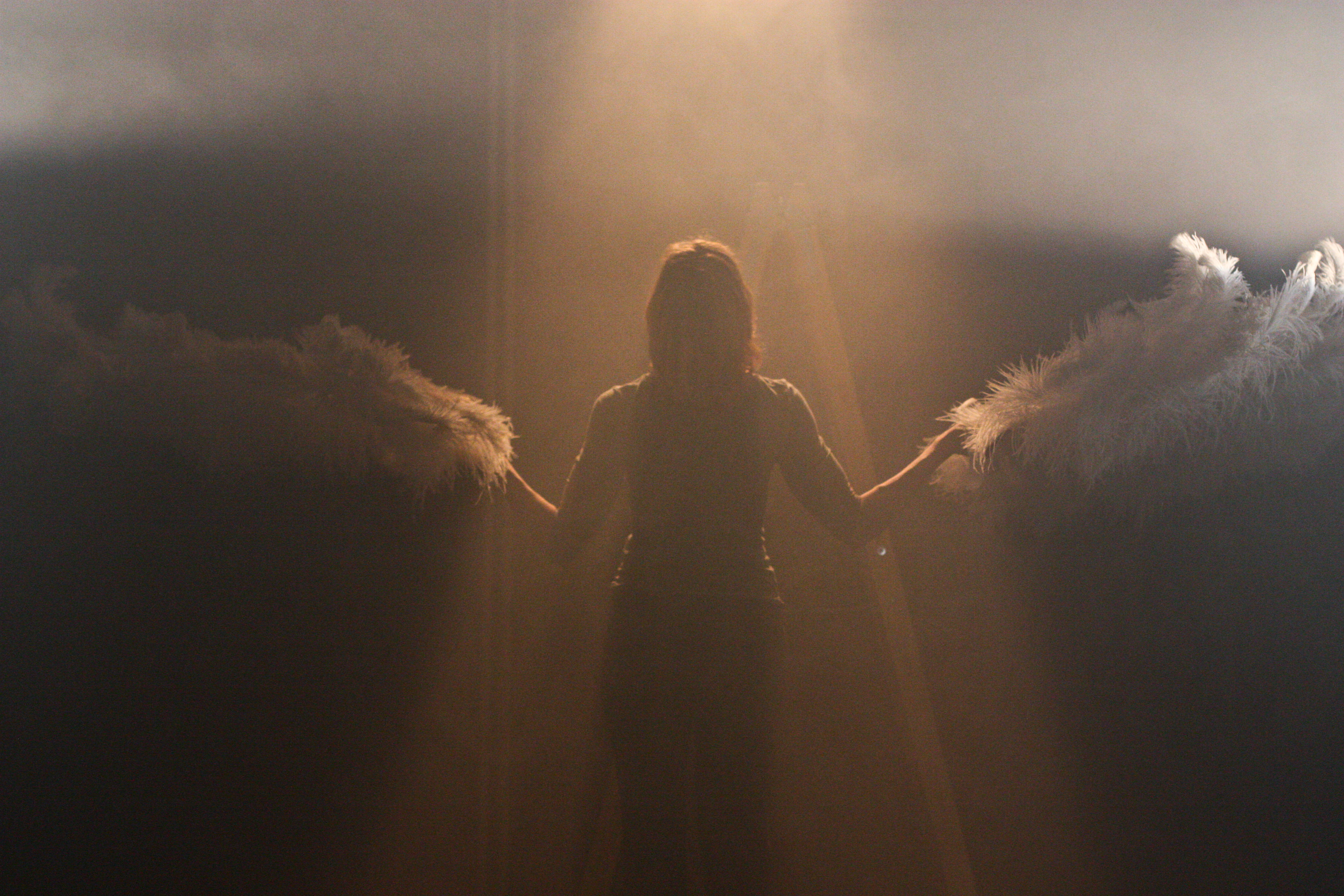
Black Swan (directed by Darren Aronofsky, Fox Searchlight Pictures)


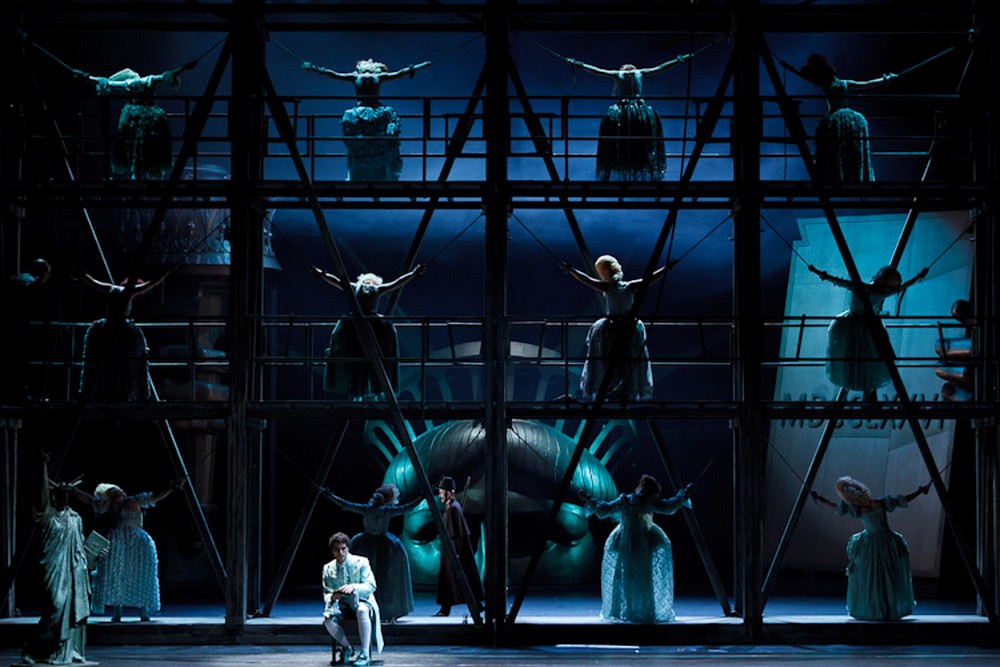
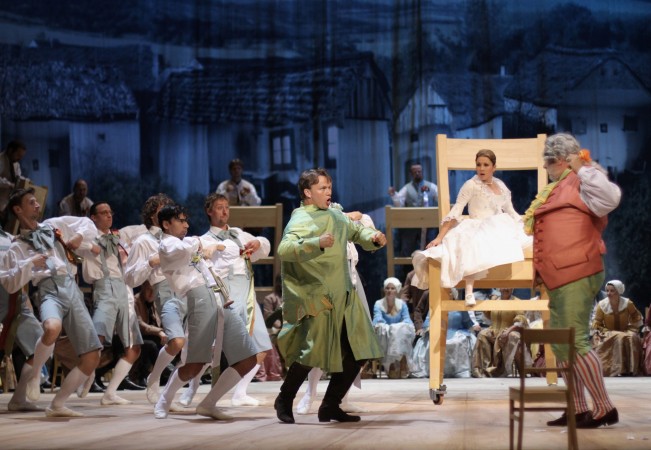
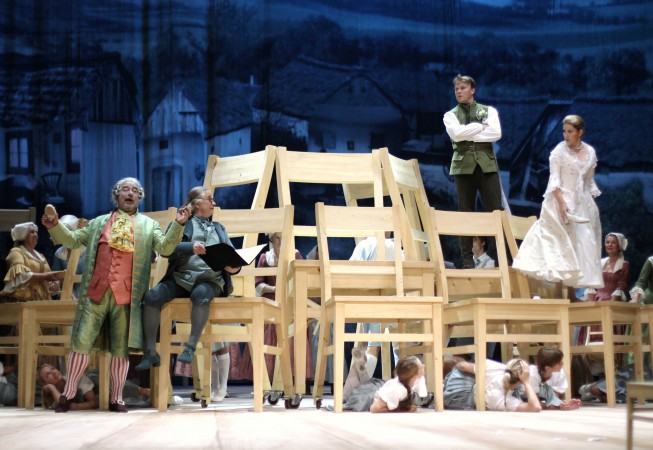
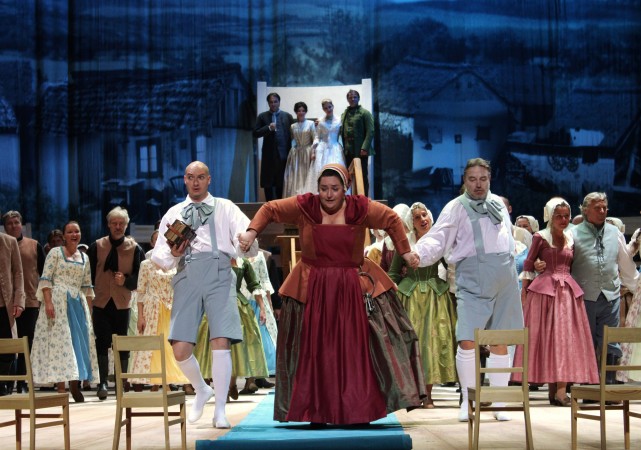
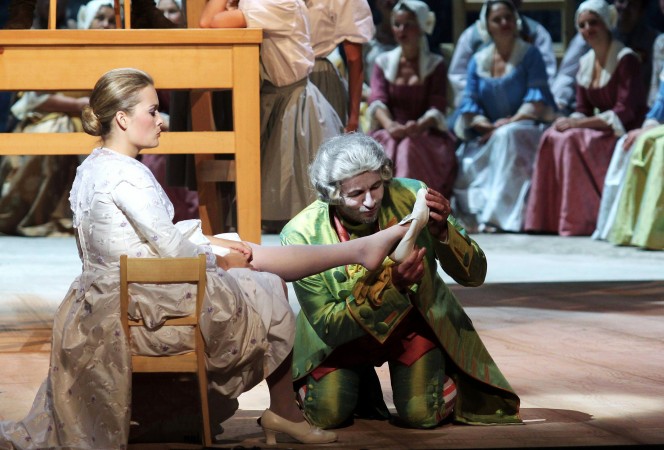
The Jacobin by Antonín Dvořák, National Theatre in Prague, design by Daniel Tesař. Source: http://www.narodni-divadlo.cz/cs/predstaveni/5690



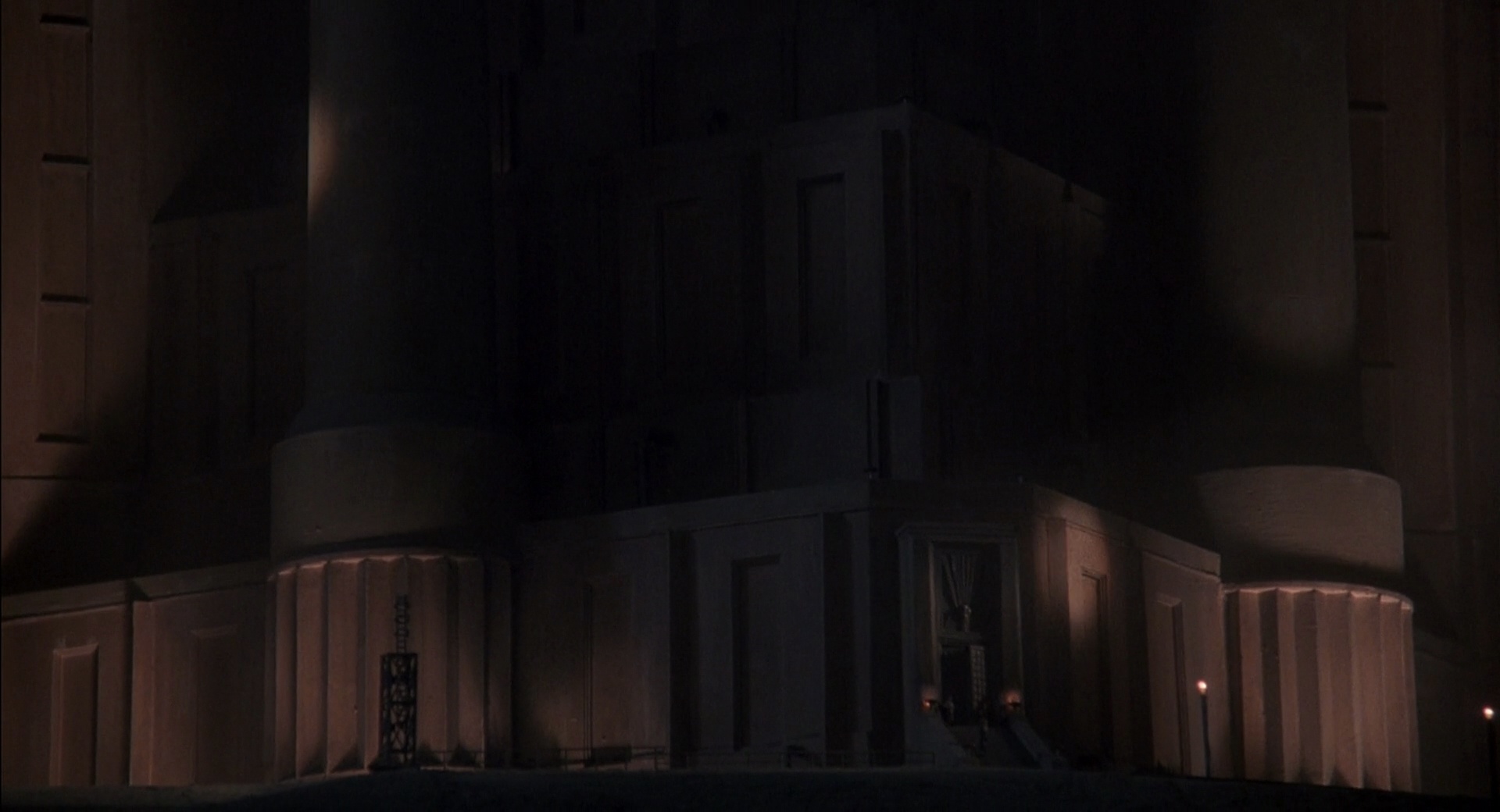
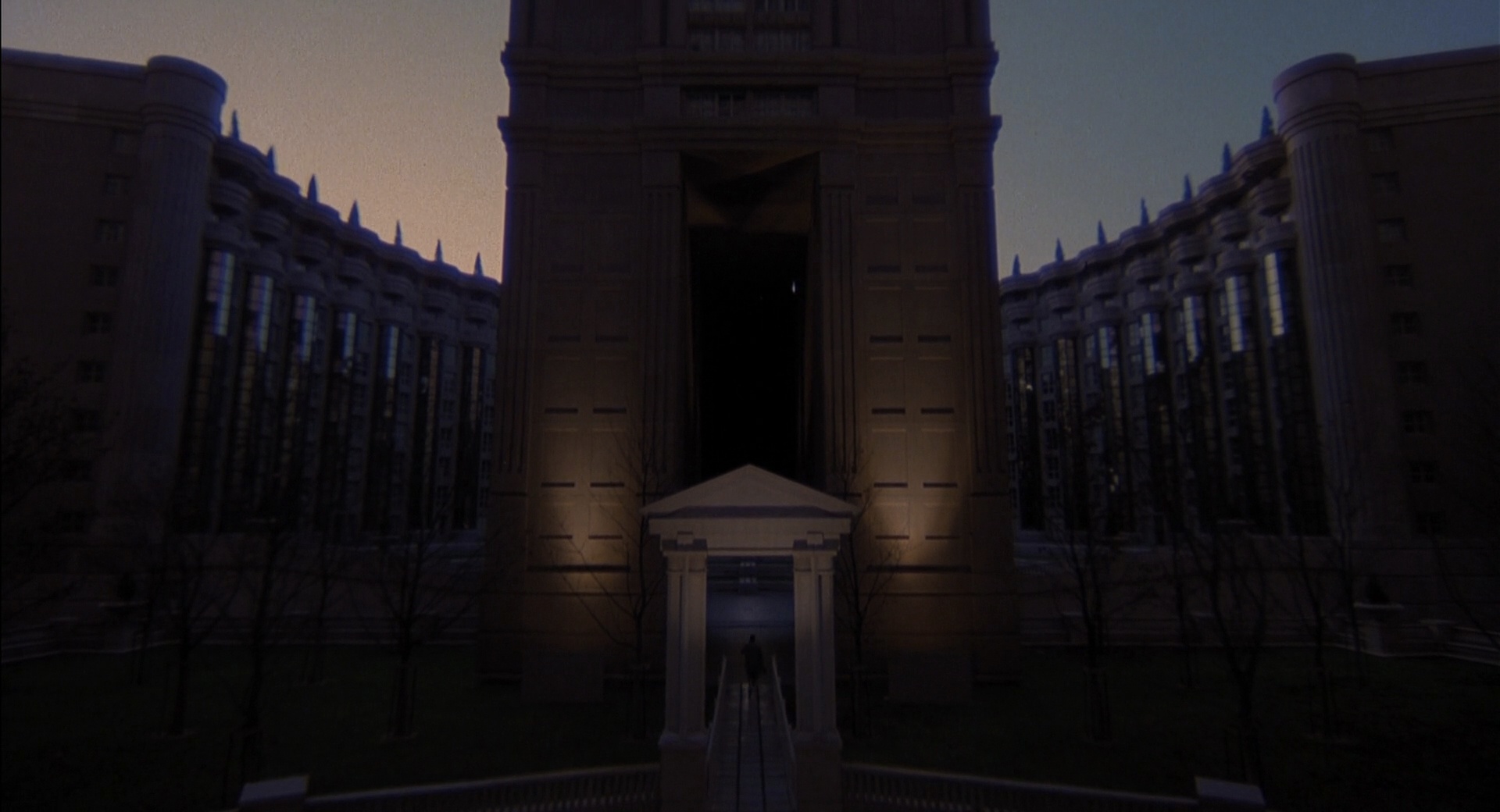
Brazil ( directed by Terry Gilliam, 20th Century Fox)