3.4 Successive contrast
3.4 Successive contrast
Successive contrast refers to the process of adjusting the eye to a situation. If we keep our sight aimed on a given color, the eye adapt itself and intensity of color seems to be gradually reduced. If the sight is shifted after a certain period of time to white surface, a pseudo color would be seen there. If the surface is colored, a mixture of a pseudo color with the real ones occurs. To put simply, the sight perceives the colors even when they are no longer there, there is delay in adapting to a new condition. Successive contrast emerges for instance when sight shifts from a colored area to the white one.
There are several effects:
If you focus your sight into light of a bulb and then subsequently turn away from it, a black spot is seen that is a negative image of what has been seen before: an afterimage emerges, is being altered and disappears.
If a given color is watched, then the intensity of those components, from which it emerged, is reduced. The non applied color would be more intense at the same time. Thus for instance with longer observation of red, some green shades appear. The sight reacts to strong irritation by red with the complementary color, which is green.
Another contrast situation can happen with saturated colors. The sight gets weary when exposed to it for a certain period of time, so its sensitivity is reduced and compensates the disproportion with complementary color. The difference in color rather depends more on brightness than on the shade of color. The same impulses produce the same senses, but different perception.
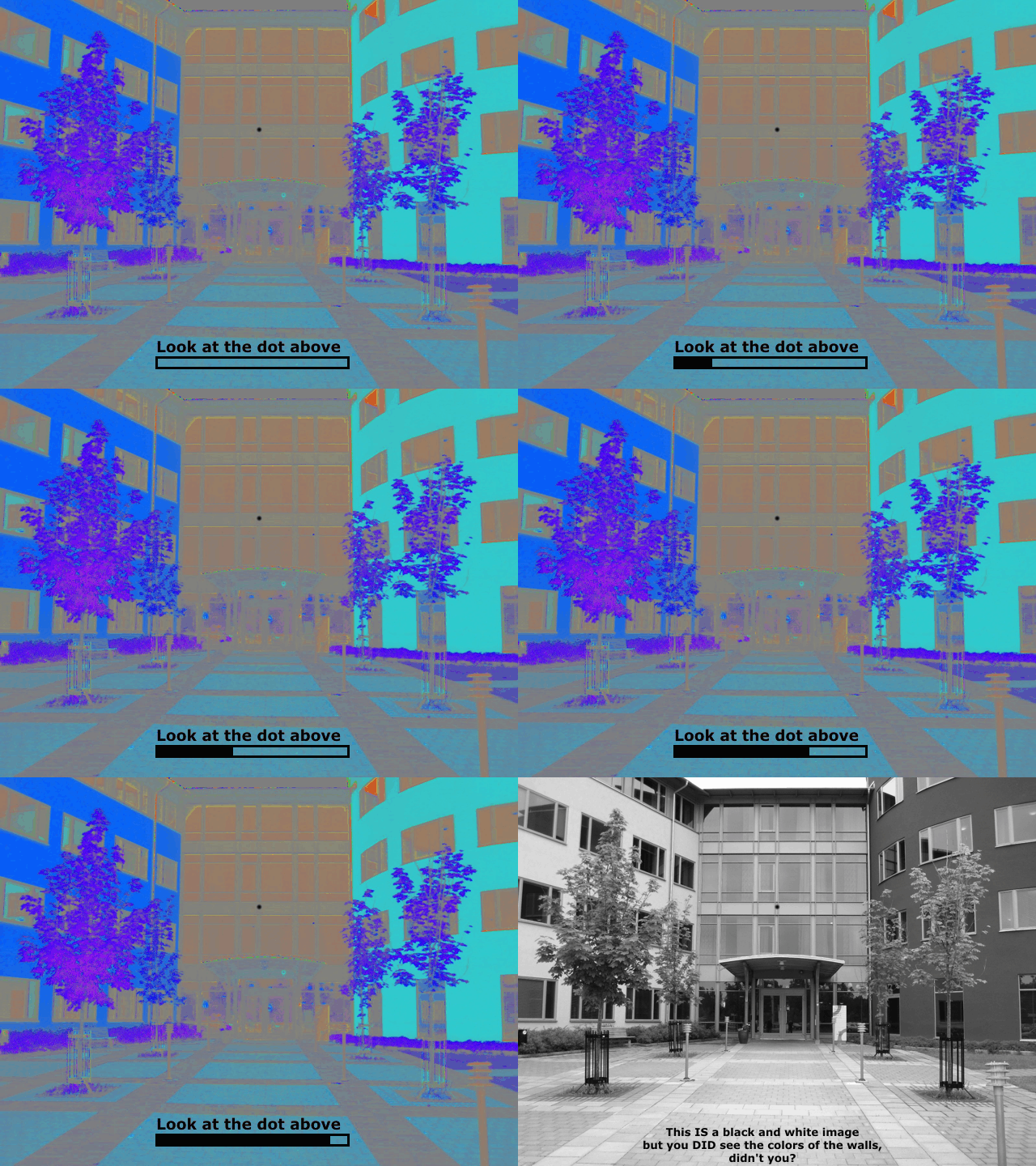
Chromatic adaptation is one aspect of the sight that may fool someone into observing a color-based optical illusion.
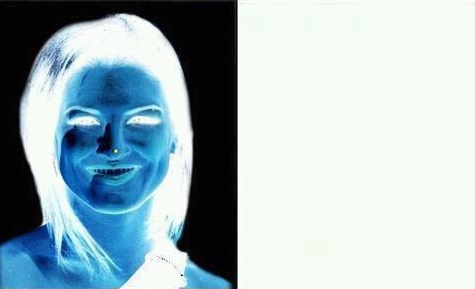
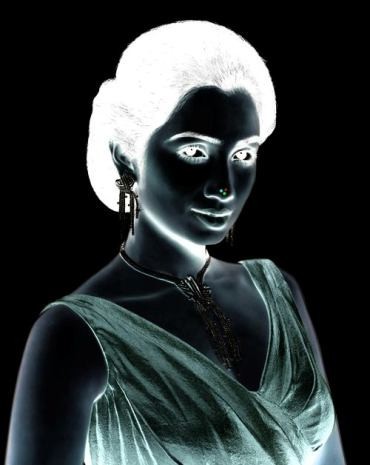
An internet meme, based on the effect of the successive contrast. Staring for half a minute onto the dot on the face and subsequent shift of the sight to the blank section creates an optical illusion.
3.5 Simultaneous contrast
Simultaneous contrast is based on the very same foundations of sight characteristics. Every color creates complementary colors in its surrounding. In this way, the sight tries to compensate the predominance of the given color impulse by creating a complementary one.
An example of a simultaneous contrast is when a grey square on white surface seems to be darker and vice versa seems to be brighter. Similarly, a grey square on a red background seems to be colored with a complementary color and thus to be tinged a bit with green.
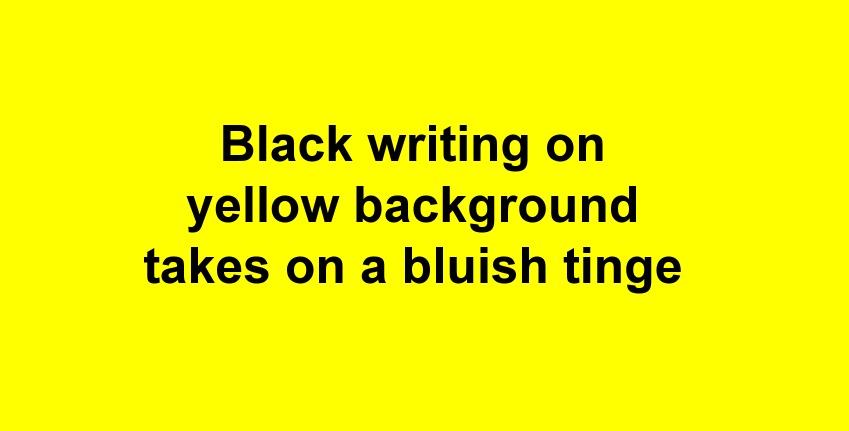
After a certain period of time.

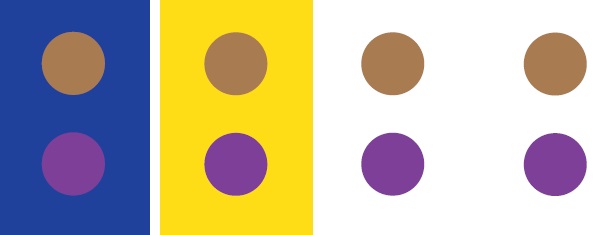
Chromatic induction. Grey square within purple attains a yellow tinge, within yellow square attains a complementary purple tinge. The same works with complementary red and green and complementary blue and orange.

Simultaneous contrast

When a color is surrounded with a darker color, it will appear lighter in comparision with being surrounded by a brighter color.
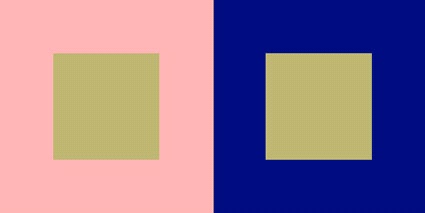
The perception of a color is influenced by the surrounding hue as it shifts the color towards its complementary hue.
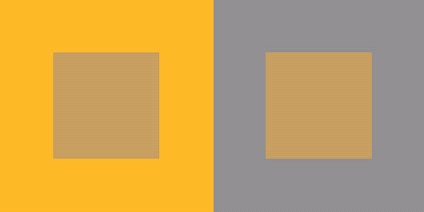
If a colors is surrounded with a less saturated color, it would appear more saturated and vice versa.
Effects
A more saturated color should be used in a smaller area than the colors with lower level of saturation.
As the sight is most sensitive to white, yellow and green, when used on large surface, there might occur a possibility of sight fatigue that impedes the concentration.
Even shadows can be composed of a mixture of colors. As a base, all shadows contain blue, a local color in darker tone and a complementary color.
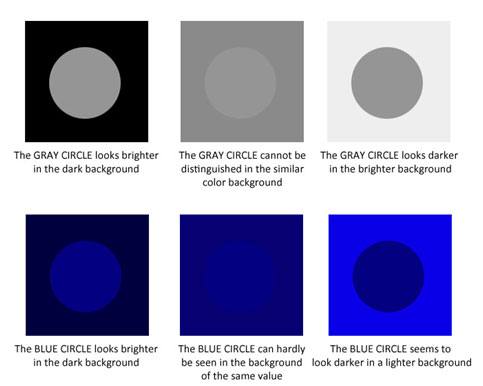
Other illusions:
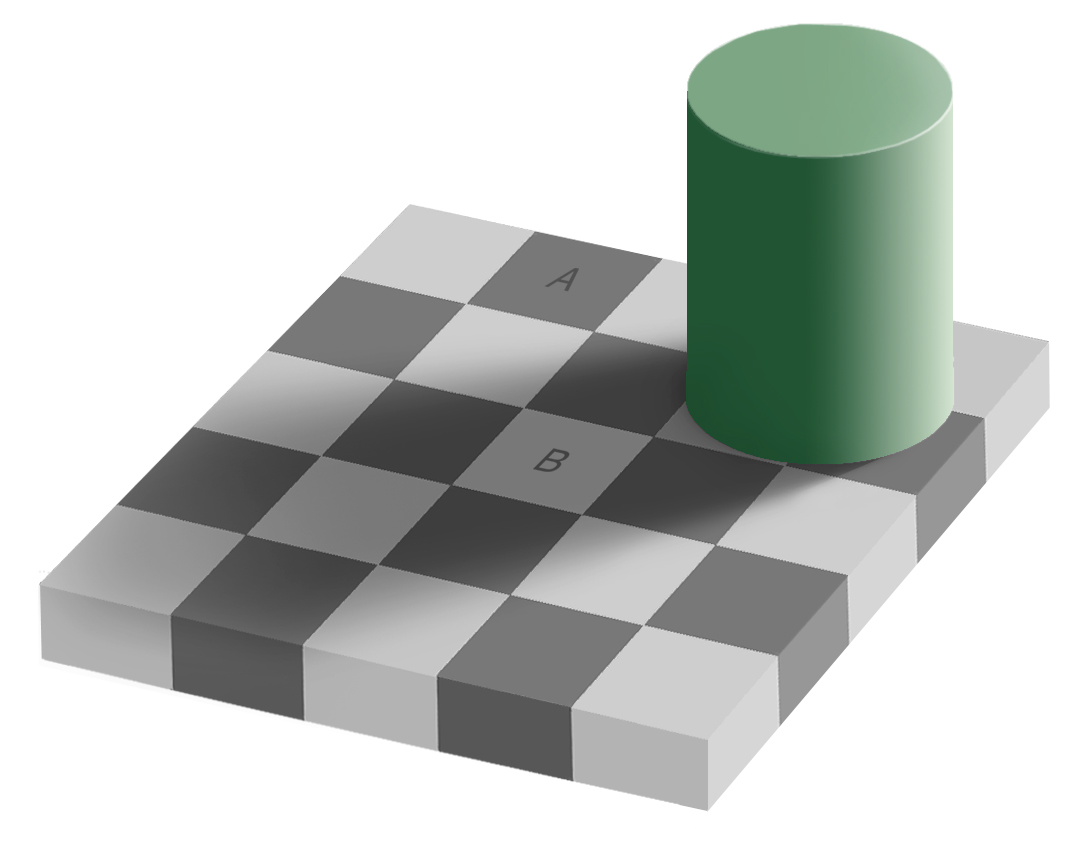
Checker shadow illusion. Areas of the image A and B are of the same color.
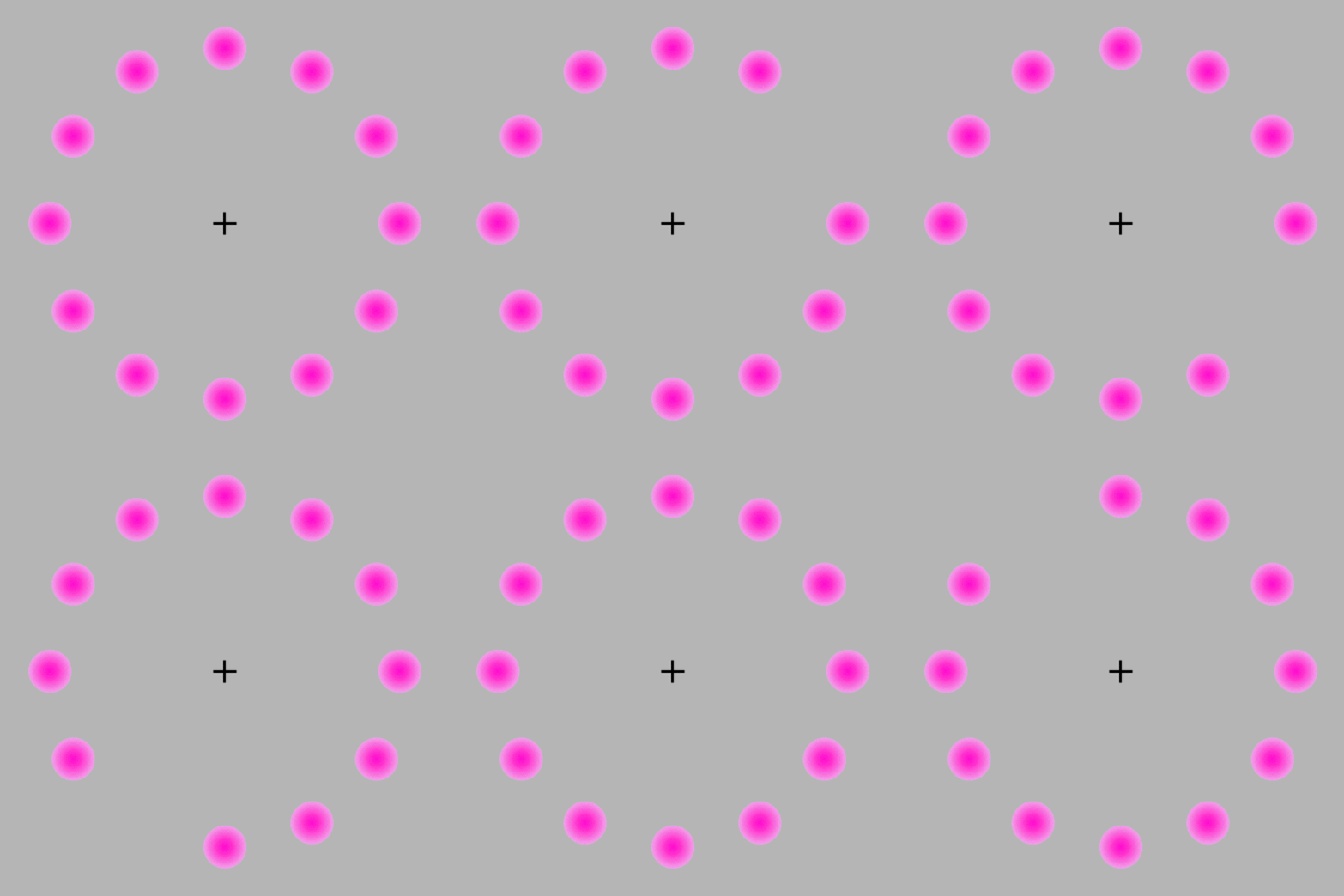
Lilac chaser visual illusion.
When one stares at the cross for about 20 seconds , one sees three different things:
- A gap running around the circle of lilac discs;
- A green disc running around the circle of lilac discs in place of the gap;
- The green disc running around on the grey background, with the lilac discs having disappeared in sequence.