4. Attributes of colors
4. Attributes of colors
4.1 Hue, saturation, brightness
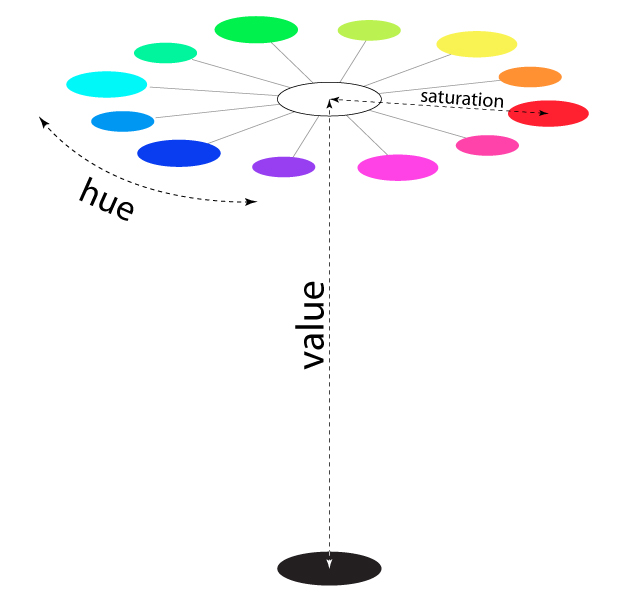
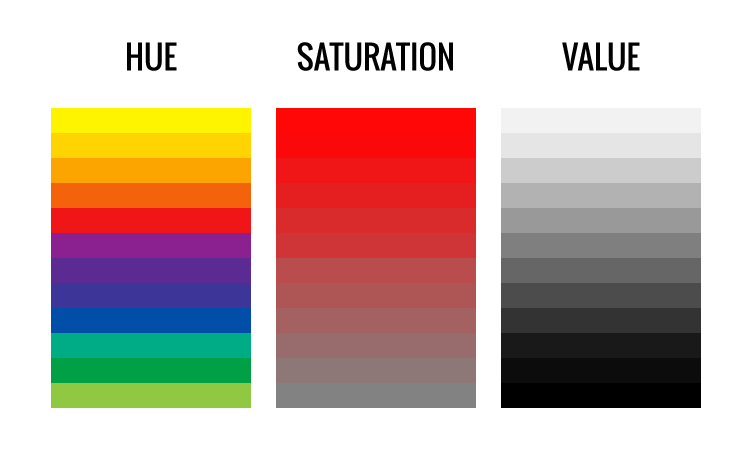
The colors can be described by three qualities that correspond to three different physical properties of light: hue, saturation, brightness (or hue, chroma, value)
Hue is a designation for basic colors of spectrum, like blue or green, it corresponds to the wavelength of incidence. Hue is a specific wavelength that belong to any color. Thus theoretically number of hues is infinite, as the spectrum is continuous, although in practice we use only general denotations like blue or red. To more precisely distinguish between different hues, people have developed such names like scarlet, chartreuse or cobalt blue.
Hue
Attribute of visual sensation which has given rise to color names, such as: blue, green, yellow, red, purple, etc. Note: This attribute is the psychosensorial correlate, or nearly so, of the colorimetric quantity dominant wavelength. (CIE 45-25-215)
Colors as white, gray or black, which possess no dominant hue are called achromatic. The hues in that colors are more or less in equal distribution. Colors, which possess a dominant hue like blue or green, are called chromatic. Therefore we can say that there are more colors than hues.
Saturation or chroma is the purity of a color. High saturation colors look rich and full. Low saturation colors look dull and grayish. We can imagine it as that less saturated chromatic colors are more or less mixed with some achromatic color.
Saturation
Attribute of a visual sensation which permits a judgment to be made of the proportion of pure chromatic color in the total sensation. Note: This attribute is the psychosensorial correlate, or nearly so, of the colorimetric quantity purity. (CIE 45-25-225)
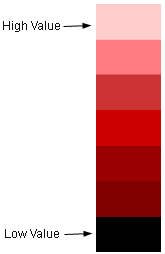
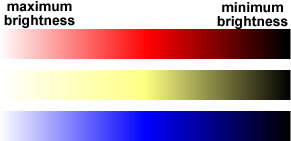
Brightness, also called value or lightness or intensity, is the attribute of visual sensation, according to which surface emits more or less light. Brightness is related to intensity. The more the light is intensive, the more the color is bright.
brightness (British: luminosity)
Attribute of visual sensation according to which an area appears to emit more or less light. Note: This attribute is the psychosensorial correlate, or nearly so, of the photometric quantity luminance. (CIE 45-25-210)
Note well that chroma/saturation and value/brightness are related but distinct concepts, each has its specific purpose (and specific notion) in different technical applications. Properly defining this three attributes is necessary to precise rendering of colors, but is far beyond needs of this lesson.
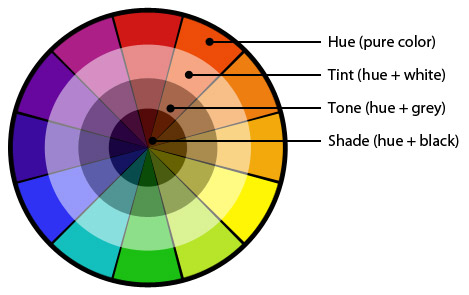
Tint, shade and tone is a way to describe colors, based on hue, saturation and brightness.
A tint is the mixture of a color with white, which increases lightness, and a shade is the mixture of a color with black, which reduces lightness, while hue remains the same. A tone is a mixture of color and grey, which reduces saturation, while lightness and hue remains the same.
5. Color models
Color mixing is generally a way of how to create a broad range of colors, using a limited color palette. Knowledge of how colors mix (especially the colors of light) is naturally a crucial for lighting designers. Partly to foresee how differently colored lights will blend on the stage, partly because many of the automated fixtures we use to illuminate the stage – like LED PARs or moving heads – are equipped with some kind of a color mixing engine. It is vital to know how to use them to reach the desired color. Most of this equipment would not respond to something like: I need that passionate pinky-red I have seen yesterday. (although the days when it will work so are not that far away). They still largely need more specified commands, like blue@30, red@100, white@50.
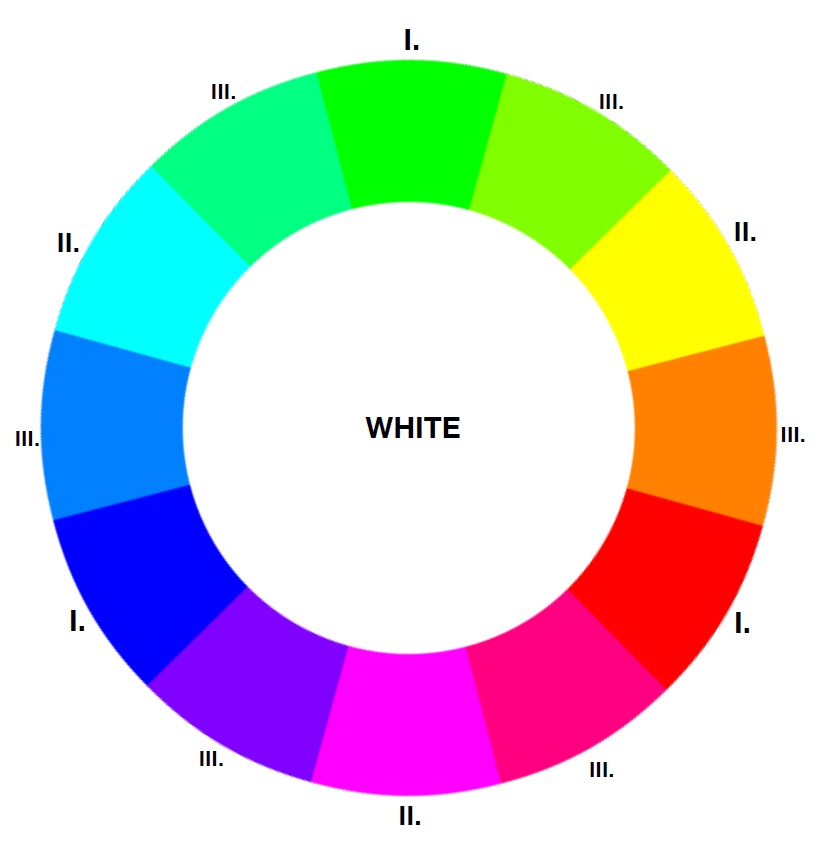
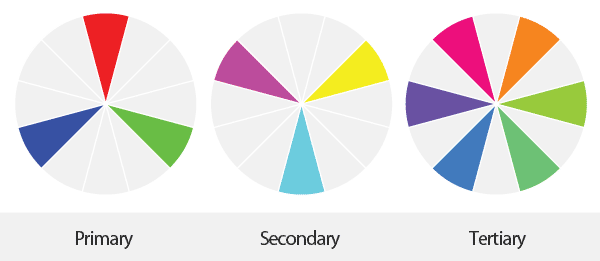
The systems of colors models are based on mixing of colors from the basic hues. From them, other colors are derived according to a specific principle. In that order one proceeds from primary (the basic ones) to secondary (mixture of basic ones) and tertiary colors (mixture of a primary one with a secondary one).
The problematic of color models and numerical representation of color is much more sophisticated than we need, we will undergo basics of only two color models, which have the largest impact on stage lighting. It is additive and subtractive color mixing models.
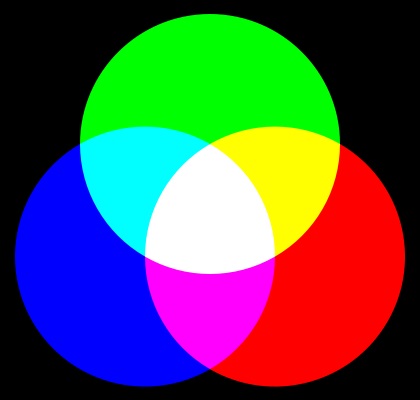
Additive color mixing
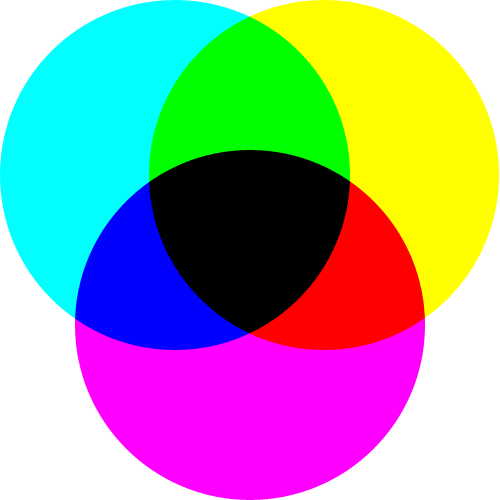
Substractive color mixing.
5.1 Additive
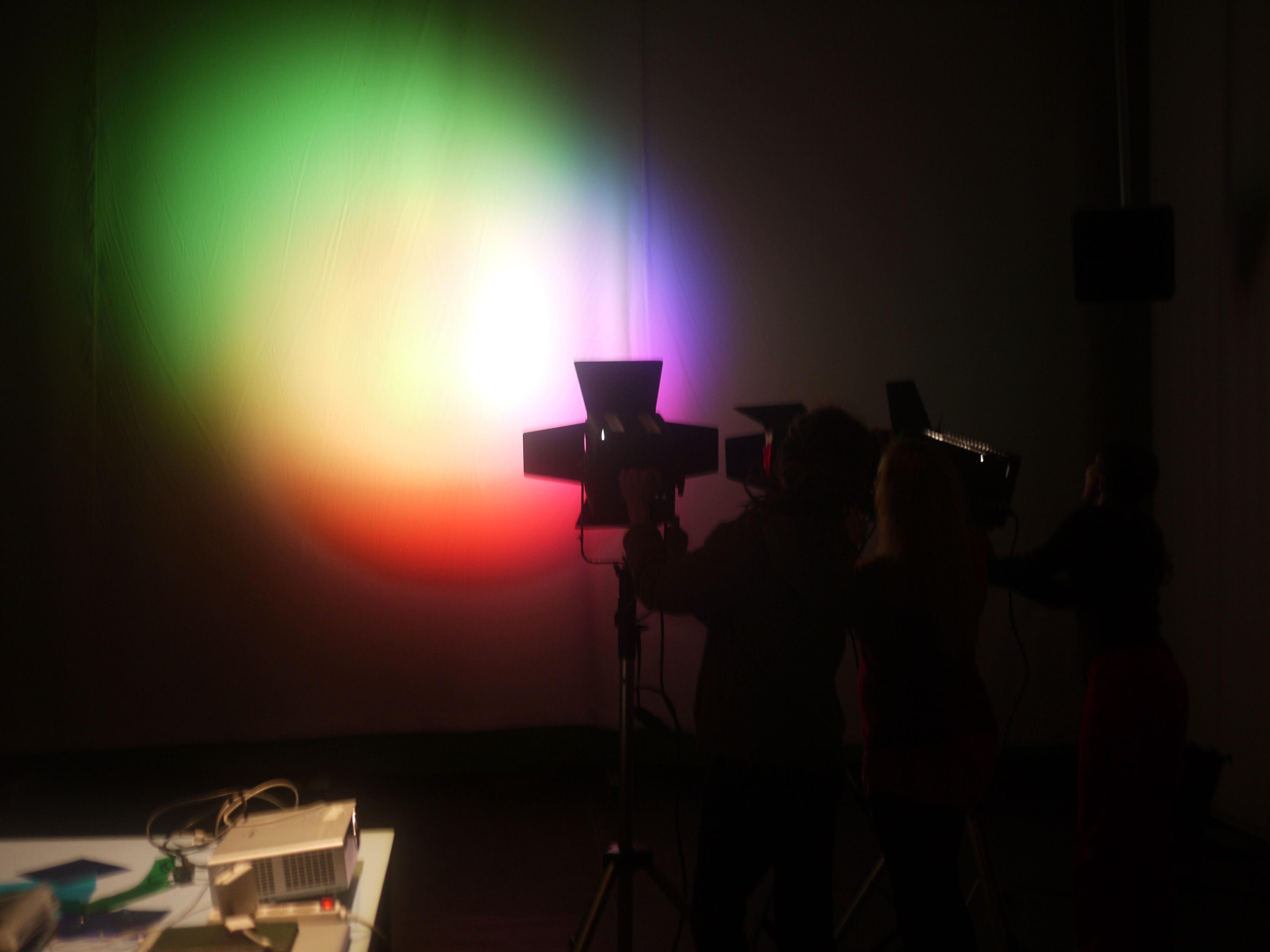
An example of additive color mixing. The picture itself is an explanation of the additive model of color mixing. First there is dark. Then there are three sources of light, each one fixed with its respective red, green, blue colors filters. In the middle, where all three beams cross each other, a white area emerges, in which the wavelenghts of all three sources are roughly under even distribution. With decresing ratio of hues from the center towards edges, white is being changed into another color as one of the concentrated beams does not reach it to the point on the outside edges, where is seen only the beam of one source. Either red, green or blue.
– RGB (Red Green Blue)
Idealized representation of additive mixing.
This system is based on emitting light and is thus of great importance in lighting. The primaries are red, green and blue, therefore it is often called RGB mixing. Red, green and blue light is added together in various ways to reproduce other colors in the spectrum.
To form a color with RGB, three light beams (one red, one green, and one blue) have to be superimposed (for example by emission from a three color LED). Each of the three beams is called a component of that color, and each of them can have an arbitrary intensity, from fully off to fully on, in the mixture. The RGB mixing is additive in the sense that the light beams are added together, and their light spectra add, wavelength for wavelength, to make the final color’s spectrum.
A / Primary colors
Primary colors are red, green and blue. They together compose white color when mixed under even distribution. Because we already know that white light is a mixture of colored light, this is probably not a big surprise. We also know (from the CRI chapter) that it isn’t necessary to fill evenly all the visible spectrum to reach the perception of white.
B / Secondary colors
Secondary colors in additive mixing are those which can be created by evenly mixing two primaries. We get cyan by mixing blue and green and magenta by mixing blue and red – which is quite intuitive. Less obvious is that we create yellow by mixing red and green.
C/ Terciary colors
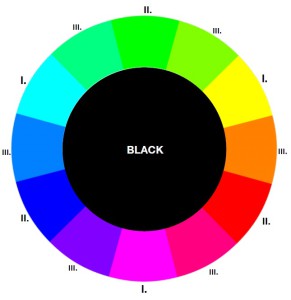
Tertiary colors are those which are created by mixing secondary and primary colors. Yellow and red produce orange, magenta and blue purple etc. Have a look on the color wheel to further examine it.

Tertiary colors
Note that by mixing colors which are opposed to each other you create white. For example, mixing red and cyan produces some kind of white. That makes a perfect sense – for cyan is a mixture of blue and green, mixing with red is then mixing red with green and blue. Colors opposed to each other in the color wheel and which can compose together white color perception are called complimentary.
In stage lighting, you are going to meet additive mixing very often. Lots of LED based fixtures are equipped by RGB LEDs, which allow us to create a variety of colors by a single fixture. It saves time and offers more flexibility to the lighting designer, but remember that there are also some odds in using RGB fixtures. Some colors just can’t be created or don’t look good – like some pastel tints or nice white. The dimming curve of the LED is not fluent, mainly at lower intensities. And the overall light output is often weaker than of conventional fixtures. On the other hand, there are also high quality LED fixtures which do not suffer any of these flaws. Many modern LED systems use four or five color diodes to add better mixing ability (usually it is RGBW – W for white diode, or RGBA – A for amber). Dimming curves are very smooth so the transitions between colors are really seamless and with further development of high power LED modules, intensity doesn’t seem to be that issue.
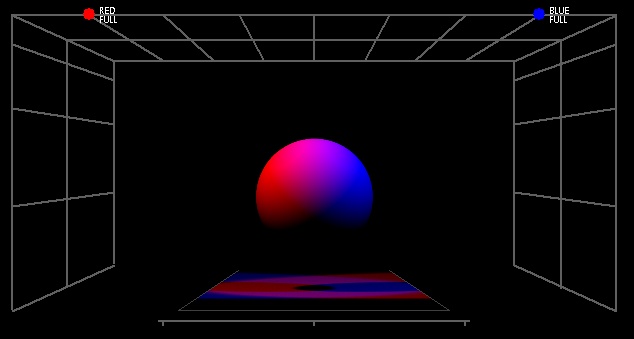
additive mixing: blue and red give magenta
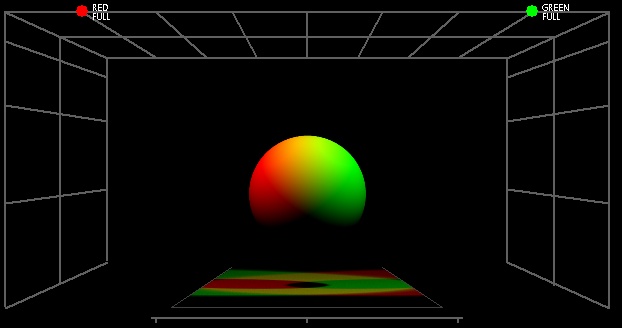
additive mixing: green and red give yellow
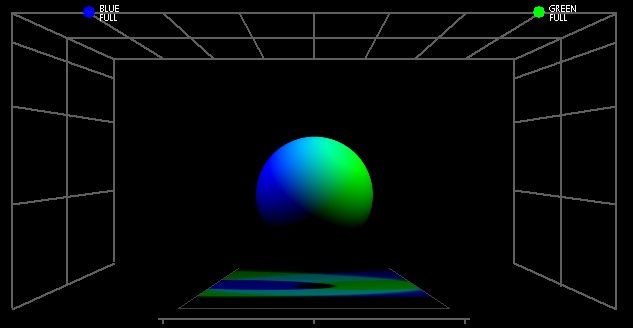
additive mixing: green and blue give cyan
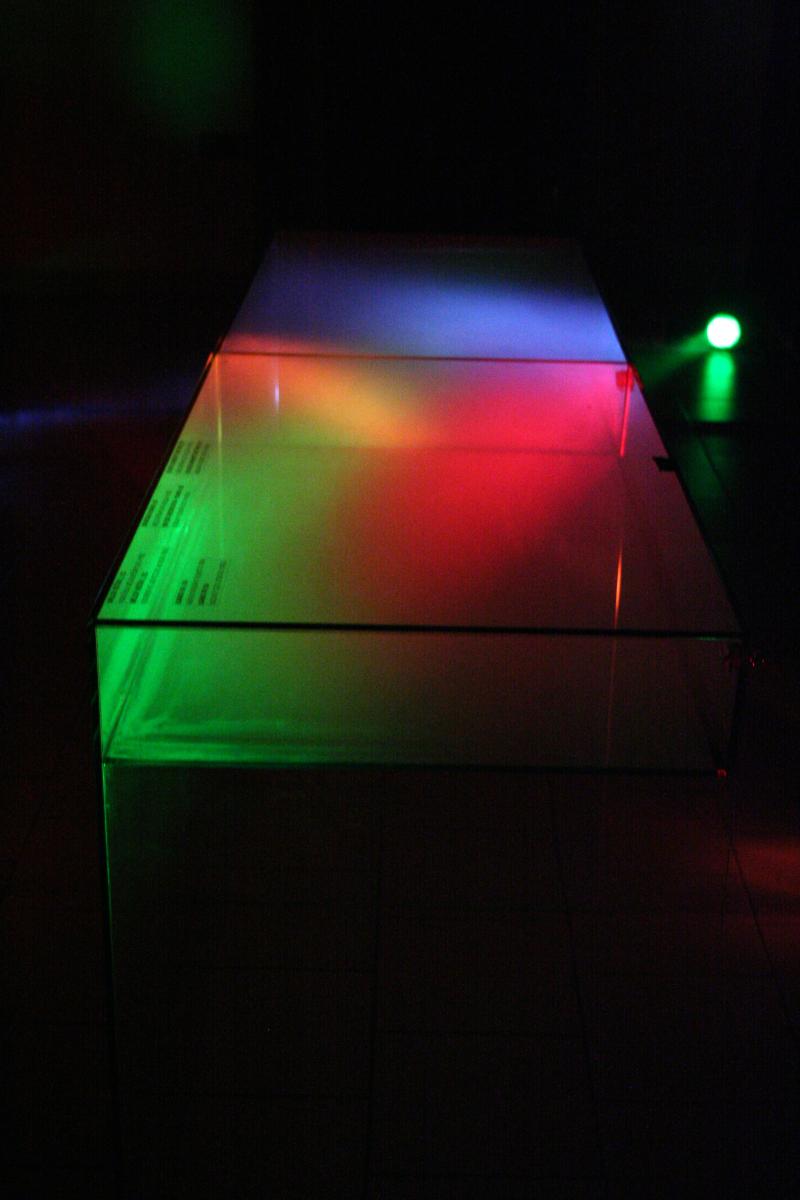
Red, green, blue.
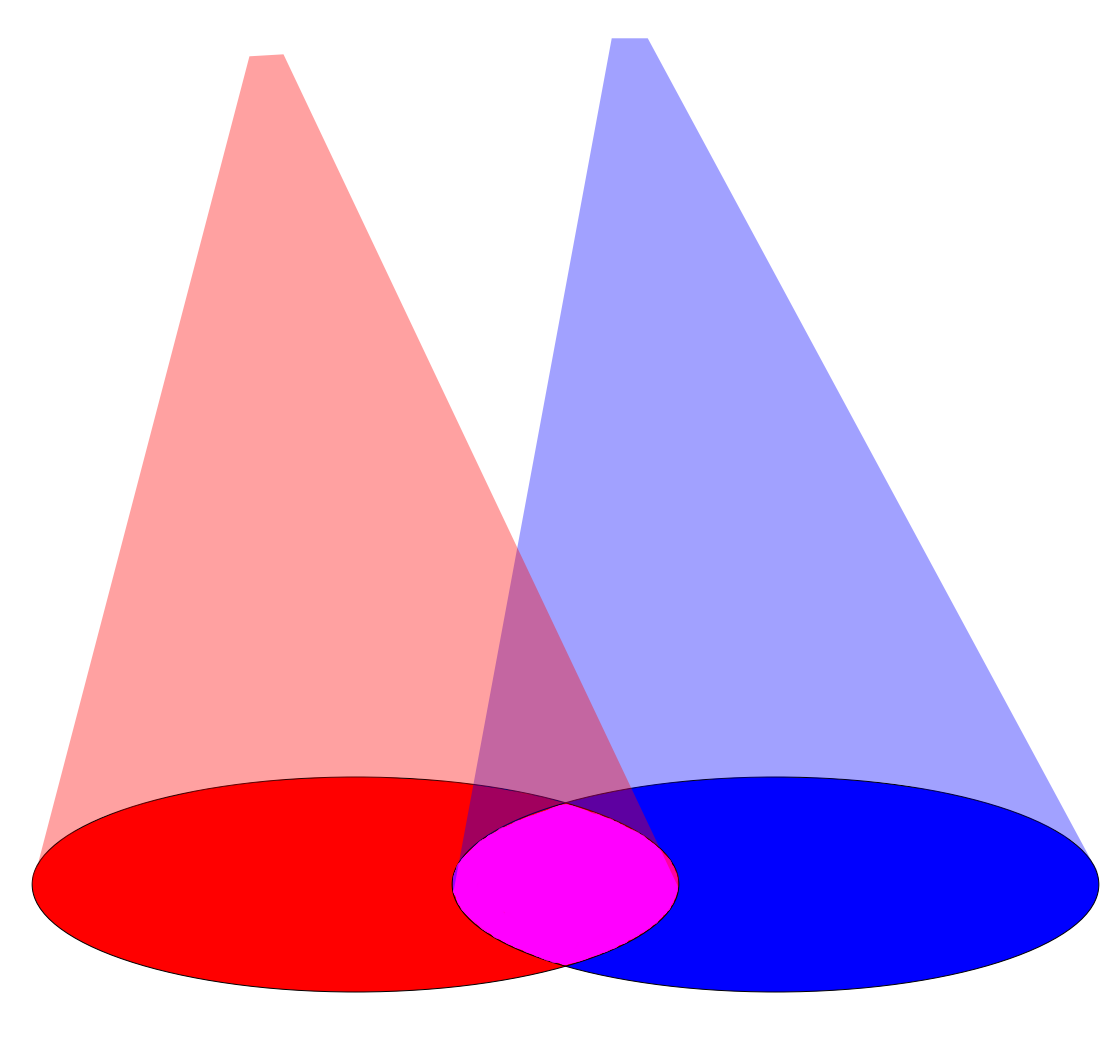
Magenta (blue and red) under even distribution.
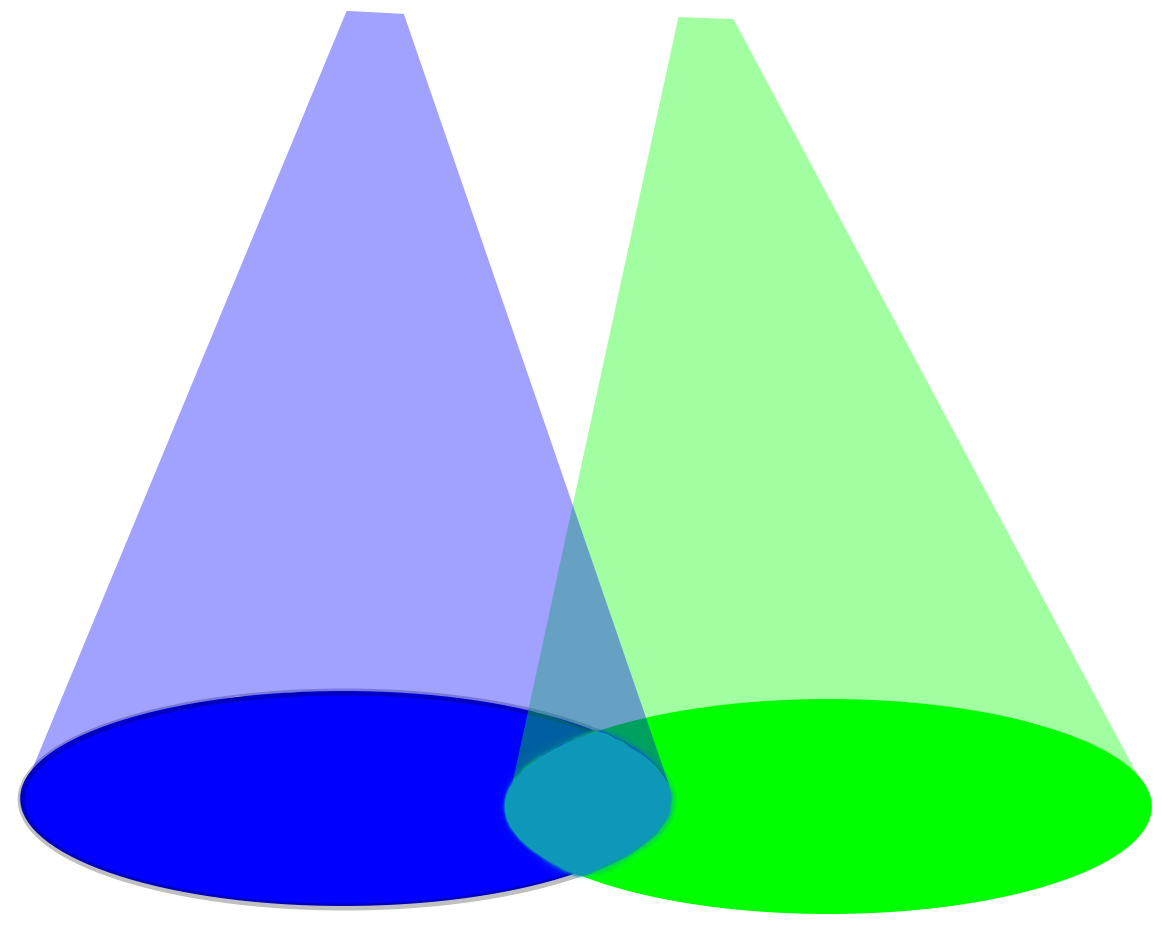
Cyan (blue and green)
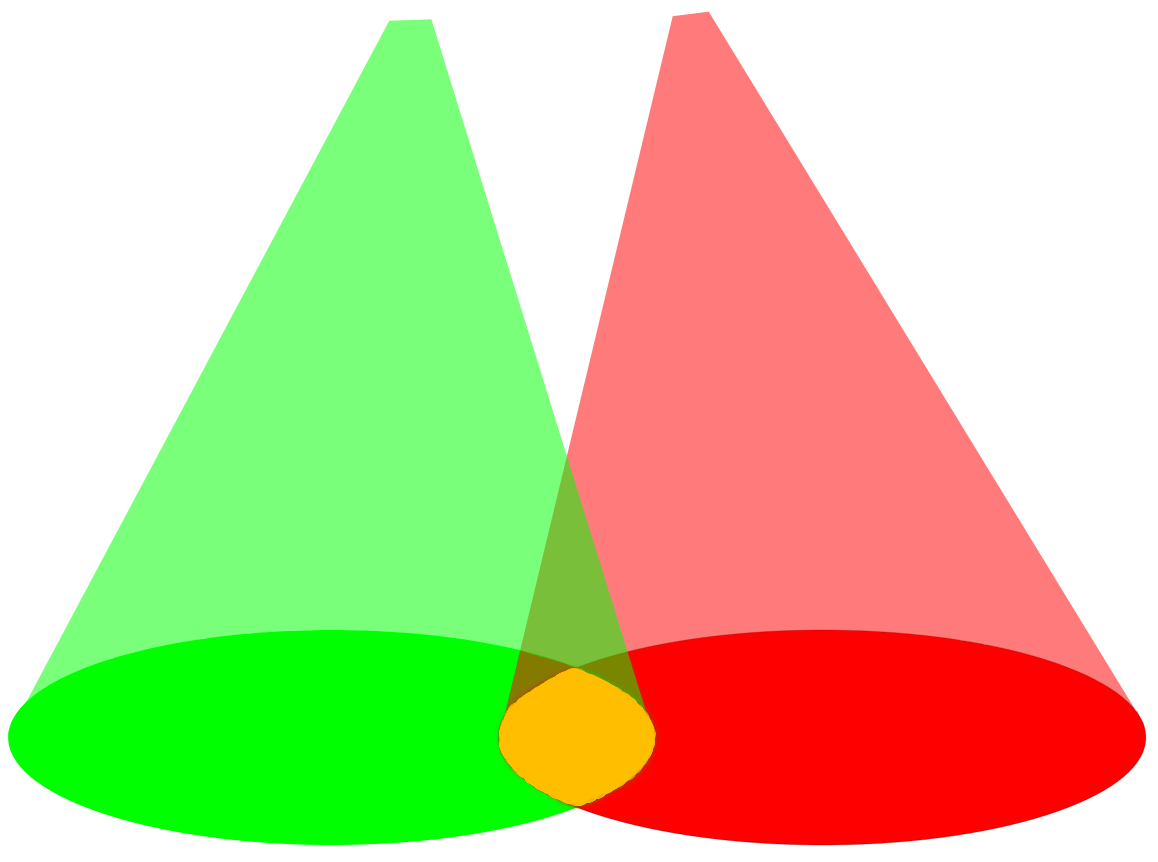
Amber (red and green)
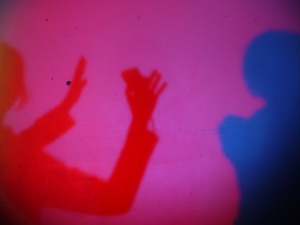
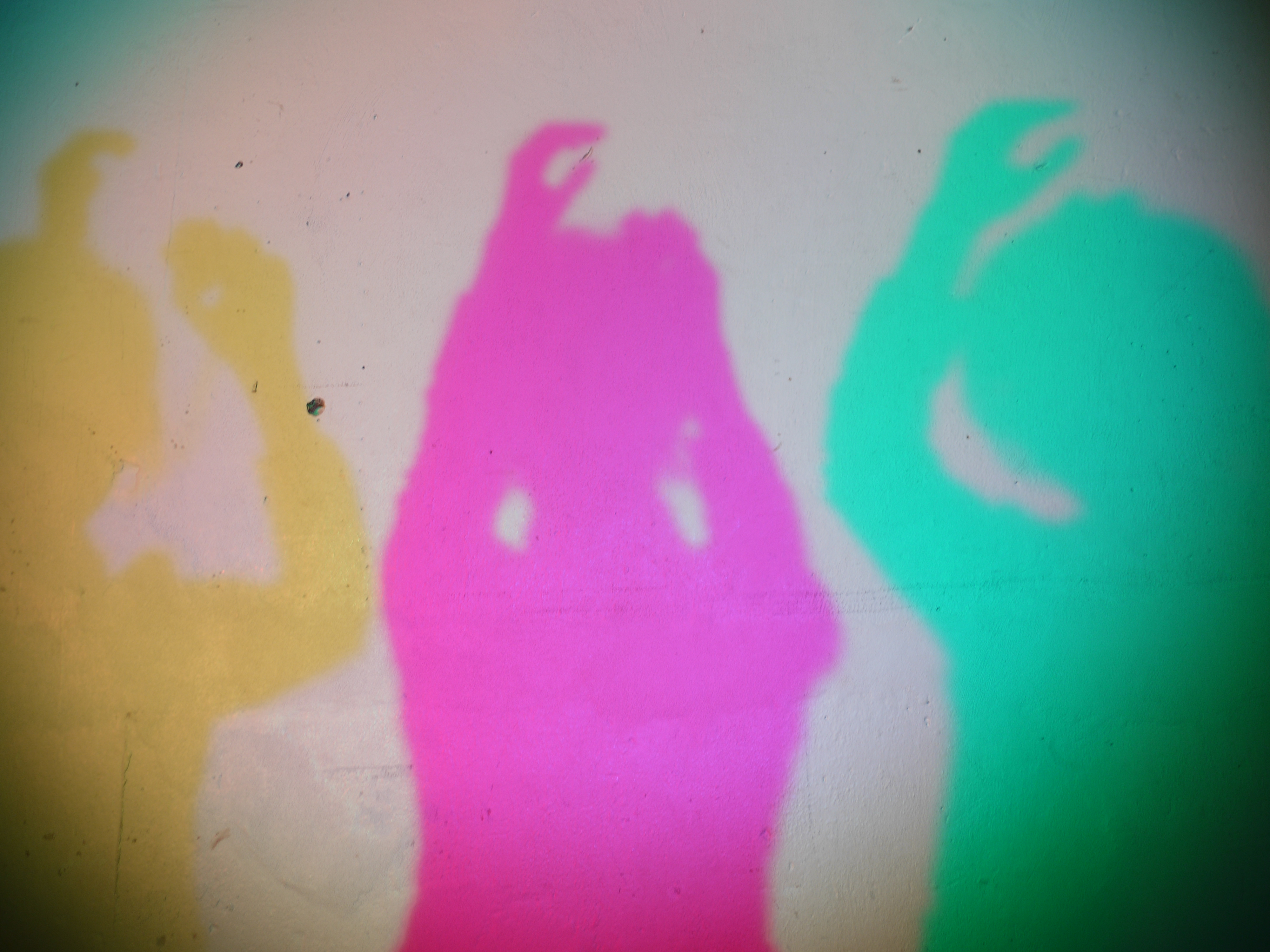
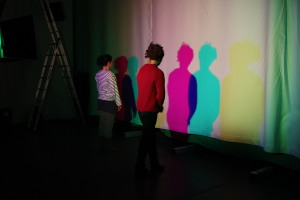
As there are basic three sources of light, each of one basic color (red, green, and blue), emitted onto the figure from different angles, they compose white light. When one source is screened by the figure the color changes as it is deprived of one its component. Yellow lacks blue, cyan lacks red, magenta lacks green
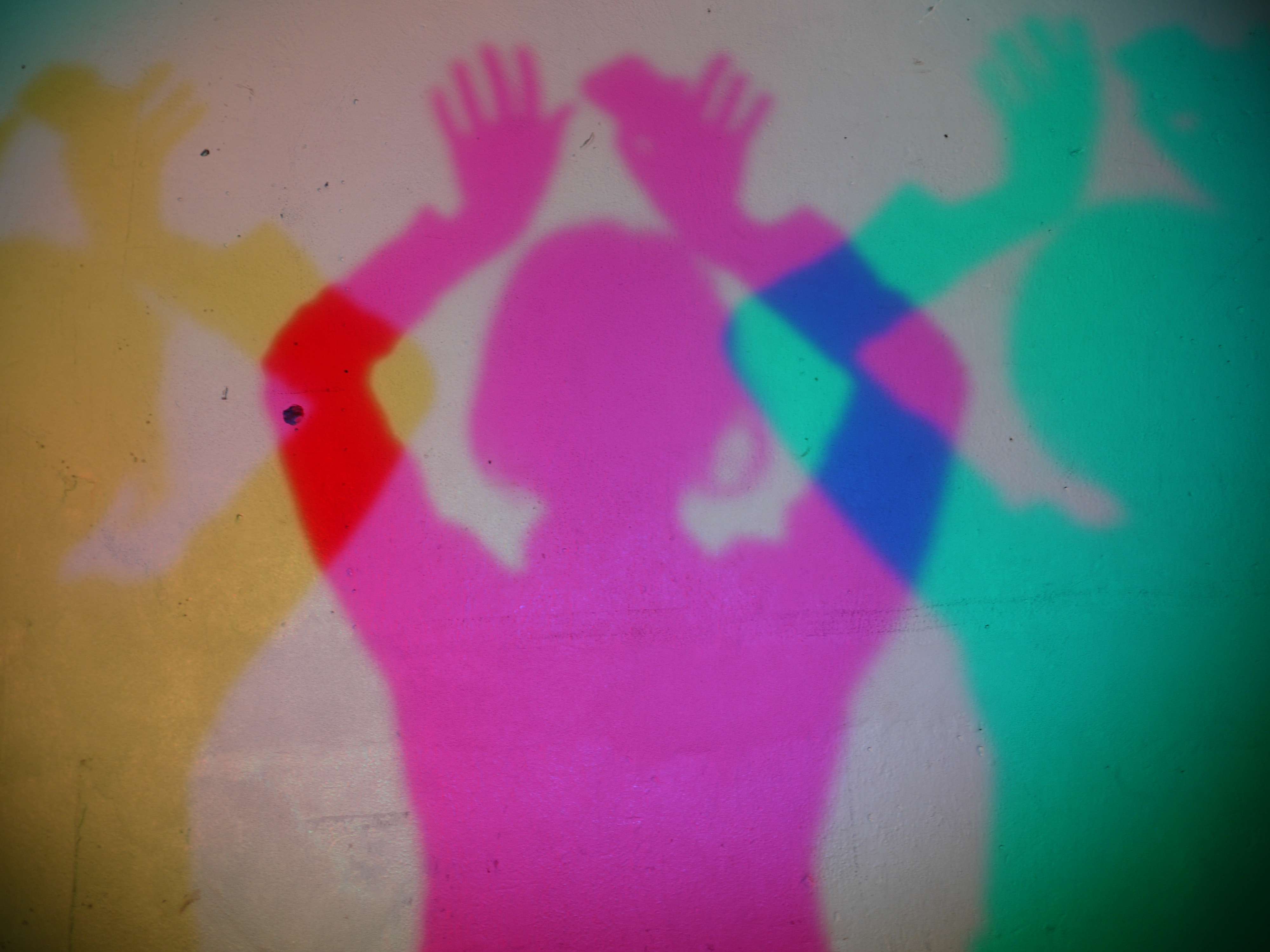
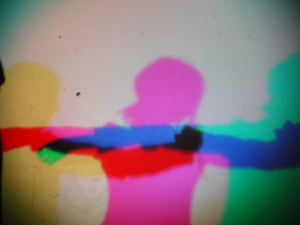
When light sources were moved to a different angle, now there are locations around elbows where two sources are blocked at once. Blue and green blocked on the left leaving only red; red and green blocked on the right leaving only blue.
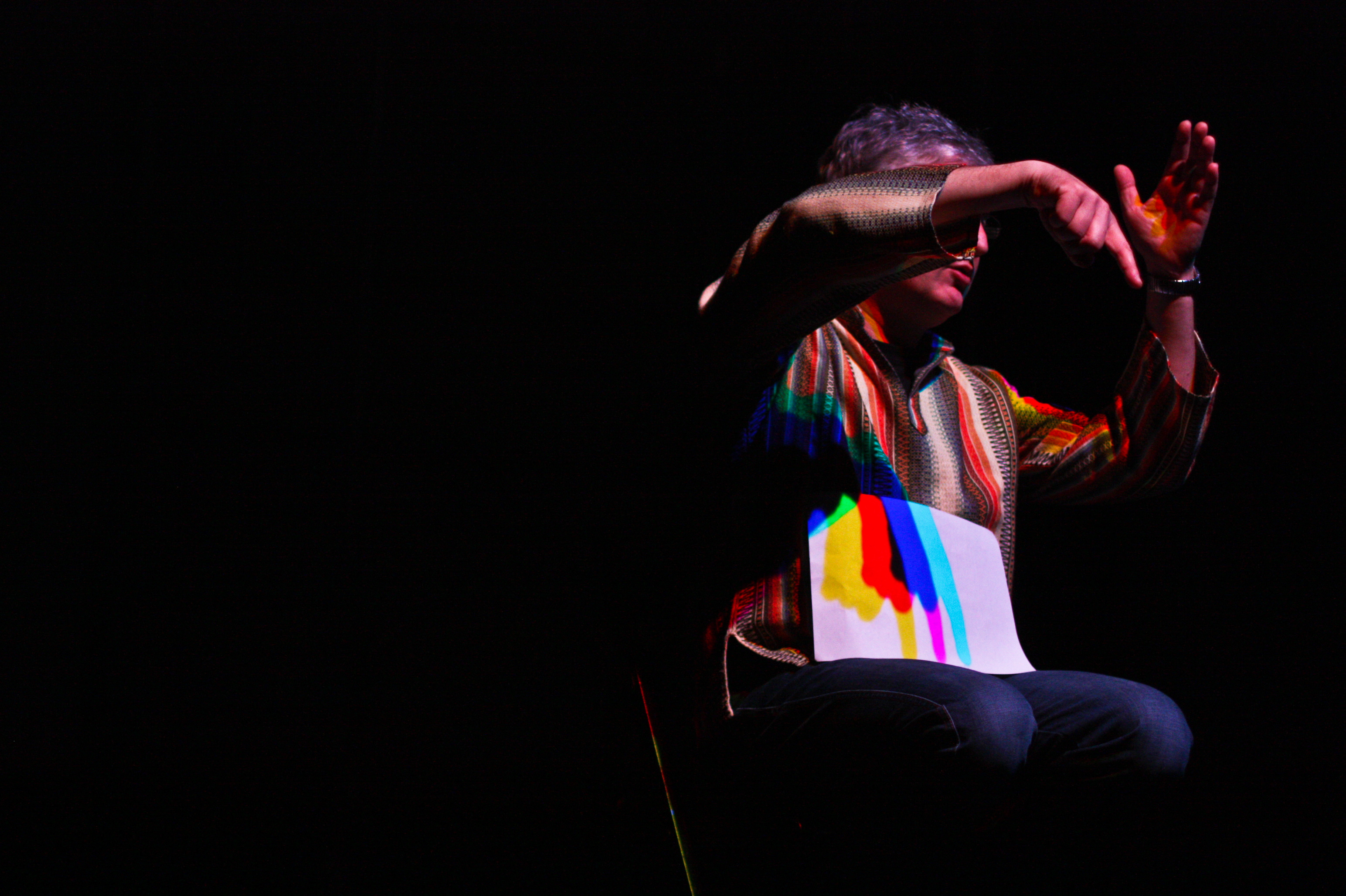
As there are basic three sources of light, each of one basic color (red, green, and blue), they compose white light. When one source is screened by the lecturer’s hand, the light in the screened section is deprived of one of its component, hence changes its color: cyan, when red is blocked and only green and blue are available, blue when red and green are blocked, i.e. only blue is available, magenta when green is blocked and only blue and red are available, red when green and blue are blocked i.e. red is available, yellow when blue is blocked and only green and red is available.
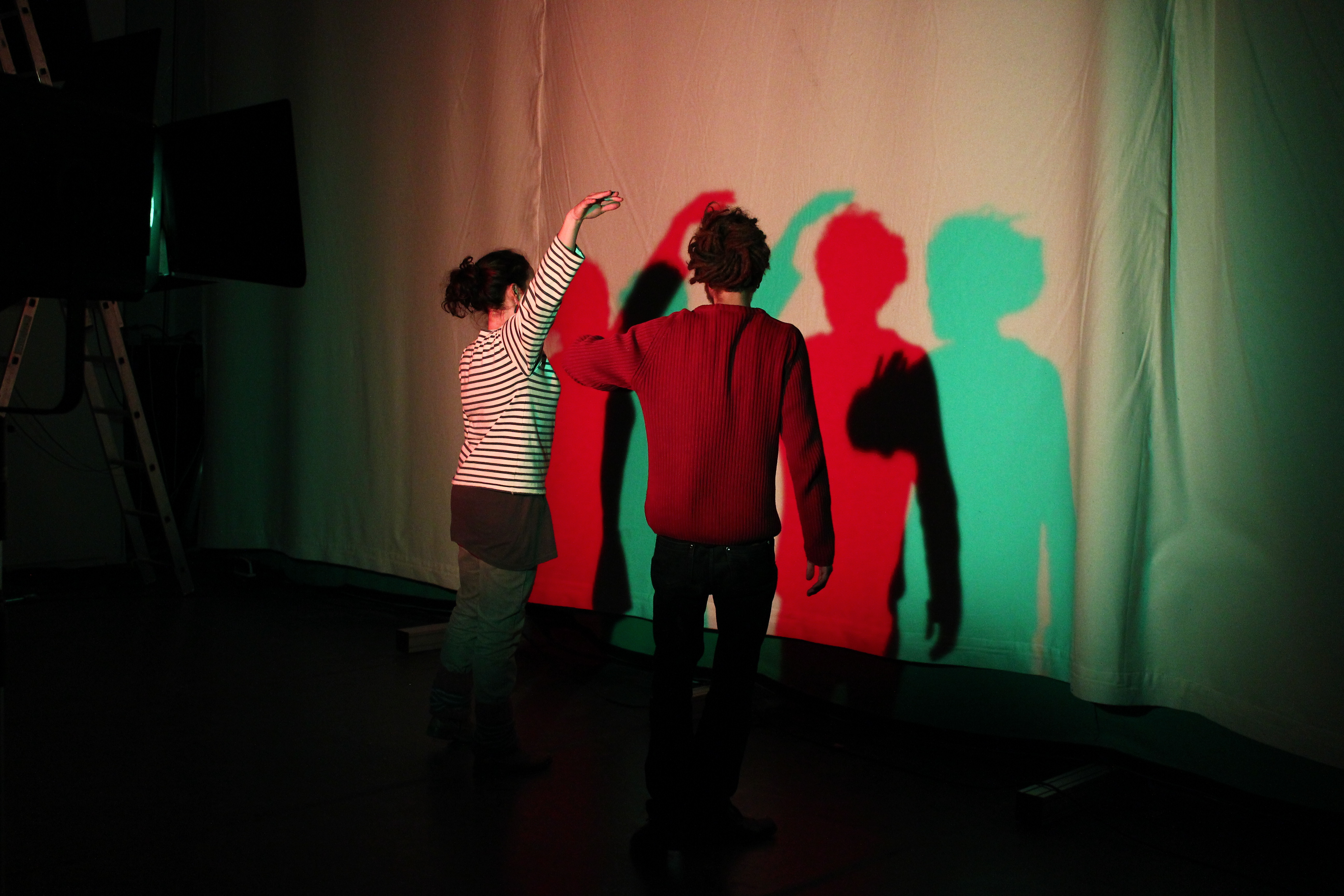
Here, this is an example of additive mixing, there are two sources of light – red light on the left, cyan (green and blue) on the right. Together, these three components compose white light, but as the red is blocked by bodies the shadow on the right is ciant, the right hand of the right figure is black as not lit and left shadow of the right figure is red as it is lit only by red light as the source of green and blue is blocked.
5.2 Substractive
A subtractive color model explains the mixing of a limited set of dyes, inks, paint pigments or natural colorants to create a wider range of colors, each being the result of partial or complete absorption of some wavelengths of light. Painting pigments absorb a part of light and only a fraction is reflected – that part of the spectrum that we perceive as the color. The more pigments are mixed the more light is absorbed – in the end, the black color is perceived.
The subtractive color system is somehow opposed to the additive one. While additive mixing starts with no light or darkness to which we add colors, subtractive model starts with light (presumably white) from which we subtract colors. The subtractive color mixing uses secondary colors of additive model as the primary ones, from which further colors are made.
A / Primary colors
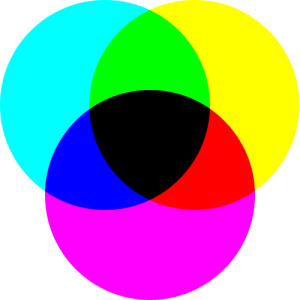
Primary colors are cyan, magenta and yellow, therefore the model is often called CMY. Every primary color absorbs a certain wavelengths of light, so the white light is somehow reduced. By mixing them all we reach the point when there is none – black appears.
This works fine while using color filters (although there is probably no good reason to put all that filters to a single fixture), but when working with pigments, mixing all the primaries usually end up in some dark grey-brown. That is why for example printing engines use CMYK color system (K for black) – to reach true black. (Actually it is analogous as using RGBW LEDs to reach better white).
B/ Secondary colors
Secondary colors of the subtractive model are the primary ones in the additive model – red, green and blue. They are composed as the primary colors are subtracted from each other.
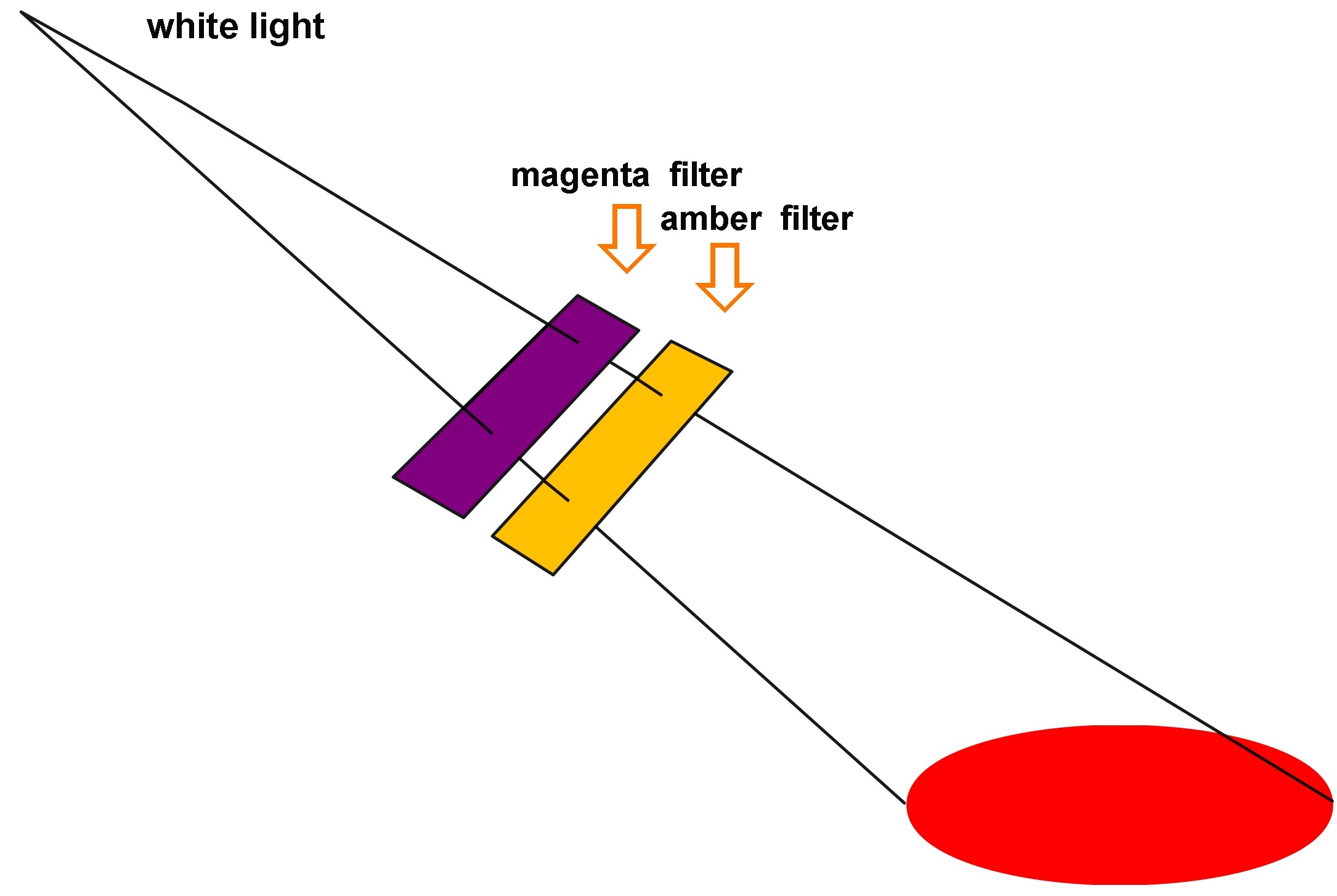
As we already know, color filters are used to subtract wavelengths of light. A magenta filter absorbs all non-magenta wavelengths, that means only red and blue parts of the spectrum are allowed to pass through (for magenta light is composed of blue and red light). By adding a yellow filter furthermore to this setting, in fact from the red and blue light, the blue part is absorbed (as yellow filters allow only red and green part of the light to penetrate) and the only color that remains is red. Vice versa, such an intuitive thing as putting together red and blue filters to make purple wouldn’t probably work as you expected. Because blue and red light usually don’t have much wavelengths in common, you will end with some kind of very dark red and poor light output.
C/ Tertiary colors
Tertiary colors are those created by mixing primary and secondary ones. There is the color wheel again and as you can see, it looks still the same. The concept of complementary colors works still with the difference that mixing them together will result in black (or no light).
Principles of subtractive mixing are used in lighting practice whenever there are more filters used in conjunction. Sometimes we put two (or more) filters into a single luminaire, usually to reach a deeper color. Moving heads with discharge or halogen lamps are commonly equipped (but not always) with a CMY mixing module. It is a set of cyan, magenta and yellow filters, each with the ability of changing its brightness – from very dark to bright. By combining them, we are able to put a wide range of colors on the stage directly from the lighting board.

6. Intensity
Concerning the qualities of light, there is one of enormous importance for the stage lighting design – the one we usually call intensity – simply: how bright is the light.
Before we undergo a brief review of the means to measure brightness, let us try this easy intellectual experiment: think of a stage with only one present actor, lit by a single 100W tungsten spot bulb hanging from the ceiling just above his head. He is well visible and appears to be brightly lit. Next, imagine that there is a white backdrop somewhere upstage which we illuminate by a batten of 1kW floodlights. Now, he is still somehow visible but we probably would not say that he is brightly lit although the bulb is still on.
With this simple example, we can see that the intensity of light is quite relative – due to the ability of eye to accommodate to different lighting conditions, perceived brightness of an object (or a light source) depends much more on the contrast with overall lighting conditions than on absolute values of the light output of that given source.
We still can measure any of these features and it is necessary to do so when illuminating public environment or artistic pieces as these branches of lighting design are subjects to many rules and regulations, but in stage lighting design, you can probably live without it. Measuring the light is in my opinion mainly useful for comparison of different light sources. Some time ago, everyone was more or less aware of the difference between 1 kilowatt Fresnel and 750 watt ellipsoidal (as much as “brightness” concerns). With modern sources of light like LEDs, things have become more complicated.
How can we measure brightness of a light source? The adjective “bright” can refer to several features: a light source which delivers high luminous flux, or to a light source which concentrates the luminous flux it has into a very narrow beam, or to a light source that causes bright illumination of specific area. Because of the ways in which light propagates through space — spreading out, becoming concentrated, reflecting off shiny or matte surfaces — and because light consists of many different wavelengths, the number of different kinds of light measurement that can be made is large and so are the numbers of quantities and units that represent them. Those that you can usually meet in stage lighting practice are:
Luminous flux:
Luminous flux or luminous power is the measure of the perceived power of light. Luminous flux is often used as an objective measure of the useful light emitted by a light source, and is typically reported on the packaging of light bulbs.
Consumers commonly compare the luminous flux of different light bulbs, since it provides an estimate of the apparent amount of light the bulb will produce. Its unit is lumen.
Luminous intensity
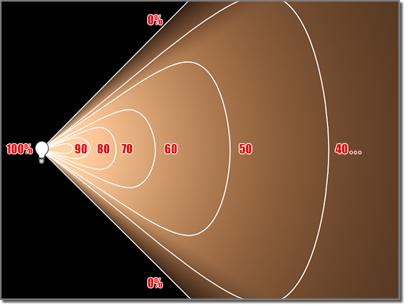
Luminous intensity is a measure of the light power emitted by a light source in a particular direction per unit solid angle. It is measured in candela.
Luminous flux (in lumen ) is a measure of the total amount of light a lamp puts out. This is useful when comparing omnidirectional sources like bulbs. But in stage lighting, we usually deal with directional sources of light – the luminous intensity (in candelas) is more useful, because it tells us how bright is the beam in a particular direction.
If a lamp has a 1 lumen bulb and the optics of the lamp are set up to focus the light evenly into a 1 steradian beam, then the beam would have luminous intensity of 1 candela (in reality, optics are not that efficient – they aren’t able to concentrate all the light output into a given direction). If the optics were changed to concentrate the beam into 1/2 steradian then the source would have a luminous intensity of 2 candela. The resulting beam is narrower and brighter, however, the luminous flux remains the same. So when dealing with directional light sources using luminous intensity, it is necessary to know the angle, which they are supposed to concentrate the light to.
Illuminance
Illuminance is the total luminous flux incident on a surface per unit area. It is a measure of how much the incident light illuminates the surface. Its unit is lux.
We can successfully use all of these units to compare different light sources.
The manufacturers of stage lighting equipment, which are serious about their industry, give some of the photometric values of their products – luminous flux of the lamp, luminous intensity at different angles and even the illuminance on different distances and also diameter of the light spot at this distance.
Lets go through a little practical example: in the theatre, where you are supposed to light a show, you are going to work with ETC Source Four zoom 25-50 and Robert Juliat 613SX 28/54. Both are zoom profiles, they have nearly the same angle range – comparing them is quite easy. You have some experience with Source four and you want to know more about RJ’s profile spot. It is always helpful when you have some experience with one of the compared luminaires. Most of us don’t know how say illuminance of 1115 lux will look like on the stage, but finding that a fixture I use often can do the same, will give me a clear notion.
Following the data sheets, the HPL 750/115 lamp of ETC S4 has luminous flux of 21600 lumens. CP70 lamp which RJ 613SX uses, has 26000 lumens. But as we know, comparing directional sources by lamp lumen output isn’t wise, because it doesn’t say anything of the optical efficacy of the whole luminaire.
Source four zoomed at 25°(tightest) has luminous intensity of 150 745 candela, 613SX zoomed at 28° has intensity 63 000 cd, thus S4 is supposed to be more than twice brighter. That is quite surprising, especially when knowing that RJ is equipped with 1kW lamp while S4 only with 750W lamp.
To verify, lets continue: for this tightest zoom, S4 is supposed to have at 15 ft (cca 4,6m) diameter of 2,2m and illuminance of this field is supposed to be 7 212 lux. 613SX at the very same distance has slightly bigger diameter of 2,3m and illuminance of 3122 lux. Again, S4 seems to be more than twice brighter.
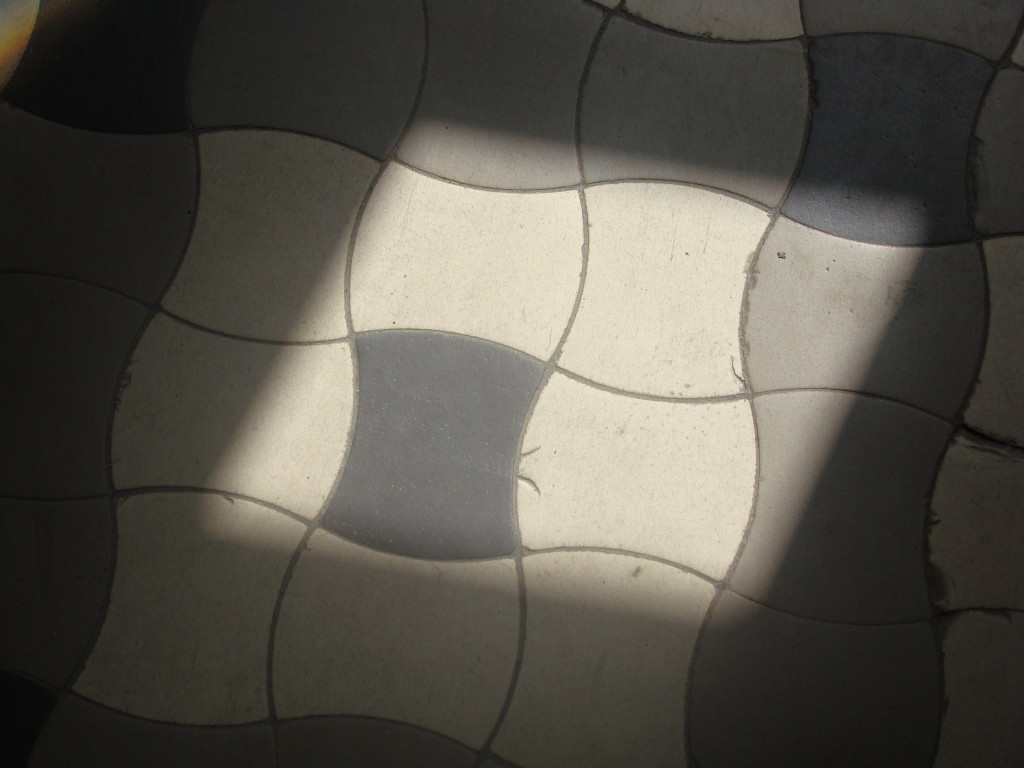
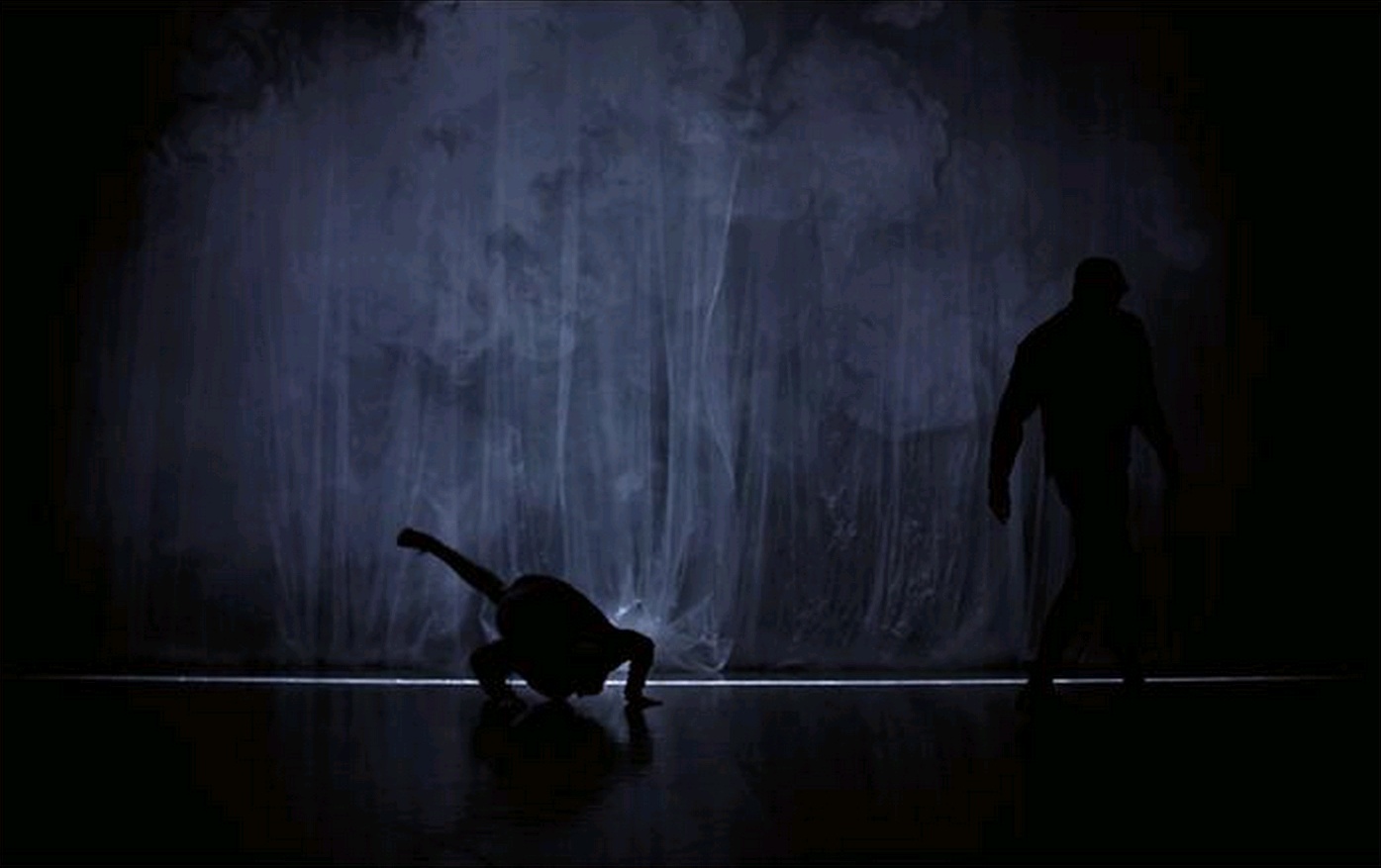
Intensity of illumination affects the perception of a color.
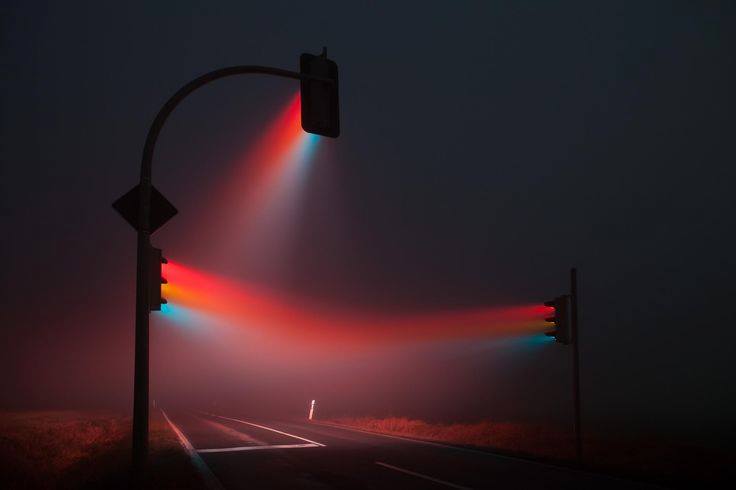
Photo by Lucas Zimmermann