6. Issues and complications
6. Issues and complications
The already mentioned rub lies in the fact that every theater space and stage lighting system are different, they don’t have the same facilities and possibilities as the domestic venue where the performance was created and implemented. The starting pitfalls are just the spatial, architectural solutions of theatrical spaces. Stages are of different sizes, which causes the need to adapt the set design to a different dimensions. It’s obvious that large stage design can be difficult to be built into a smaller theater. It depends, however, on the principle of set design – if the scenery is made of huge wings, which cannot be reduced, the performance is not executable on a smaller stage. The situation is different if the stage set includes several scenic elements (e.g., a table and chairs, wardrobe and coat hanger), which placement is possible to “shrink” – then there is no problem to fit it into a smaller stage. But the insertion of a small scenery set into larger theater can also be problematic, but that can be mostly saved by appropriately placed black flats and legs that reduce the dimension of the area and screen the view into the backstage area. A common problem is also the access door to the stage on the opposite side than at the domestic venue. Touring theater companies have to improvise and adapt to local dispositions in so many times at the outside venues. Other problems may arise with the placement of the stage equipment (turntable, fly bars, etc.).
If, however, a stage set is solved and built, there comes the light and sound. The sound would be easier than lights in this respect, but if anything else is a part of the stage set, like surround sound (quadraphonics, system 5.1 or 7.1, etc.), multiple microphones that are in an insufficient number in the theater facilities or it is impossible to connect and to control microphones at all, not to mention the connection of live bands, and sound technicians would have a lot to deal with.
But here the primary concern is the lighting. Light positions are differently located in dependence on their architectural solution in theater buildings. This affects the lighting angles, and thus it is not possible to cast light onto the stage as well as at “home” venue. Front lighting positions can be further, so that the front light at a smaller angle can for instance interfere with projection screen or inappropriately illuminate the rear section of the stage.
Side lights can be placed lower than the side walls of stage set and therefore they are often completely useless. Back lighting may not be available at all. The problem can be an insufficient number of lights on lighting positions, less number of controllable circuits, almost no other available, additional equipment, or this equipment does not match the types of instruments, intelligent lights may not be available at all. Especially at festivals where there is a lot of touring troupes, it is also necessary to correctly estimate and determine the time for all the preparations and even to have extra time for actors’ rehearsal, for them to be able to be orientated in the new space and to find the light.

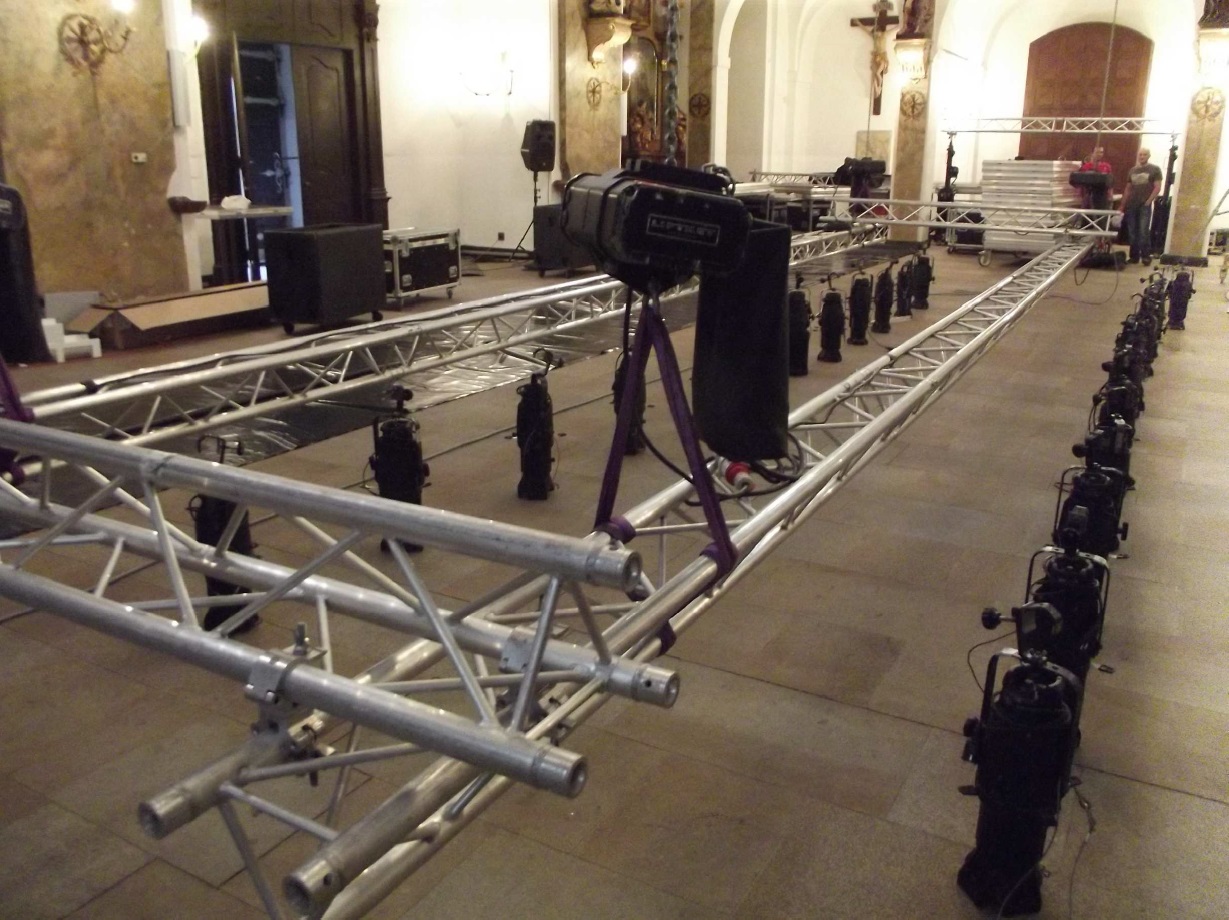
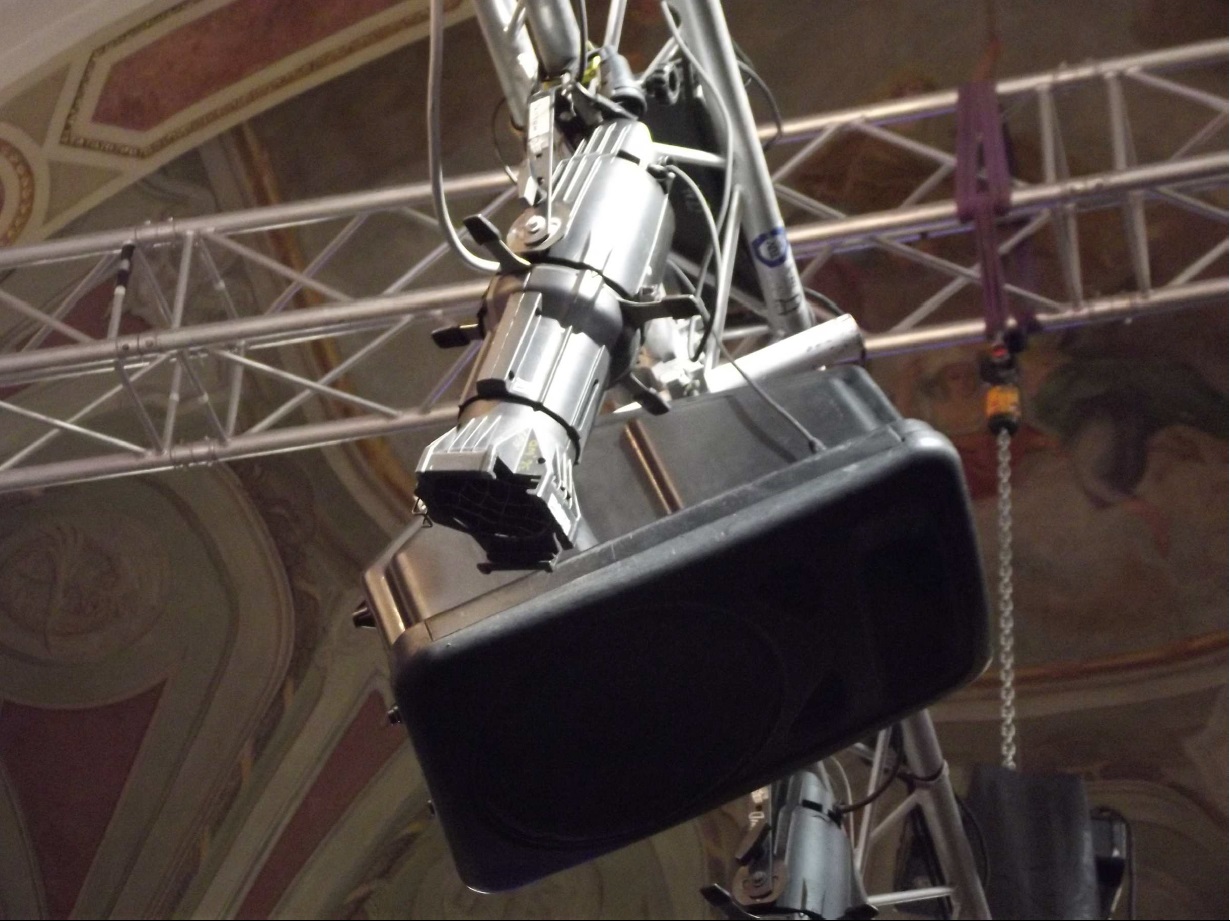
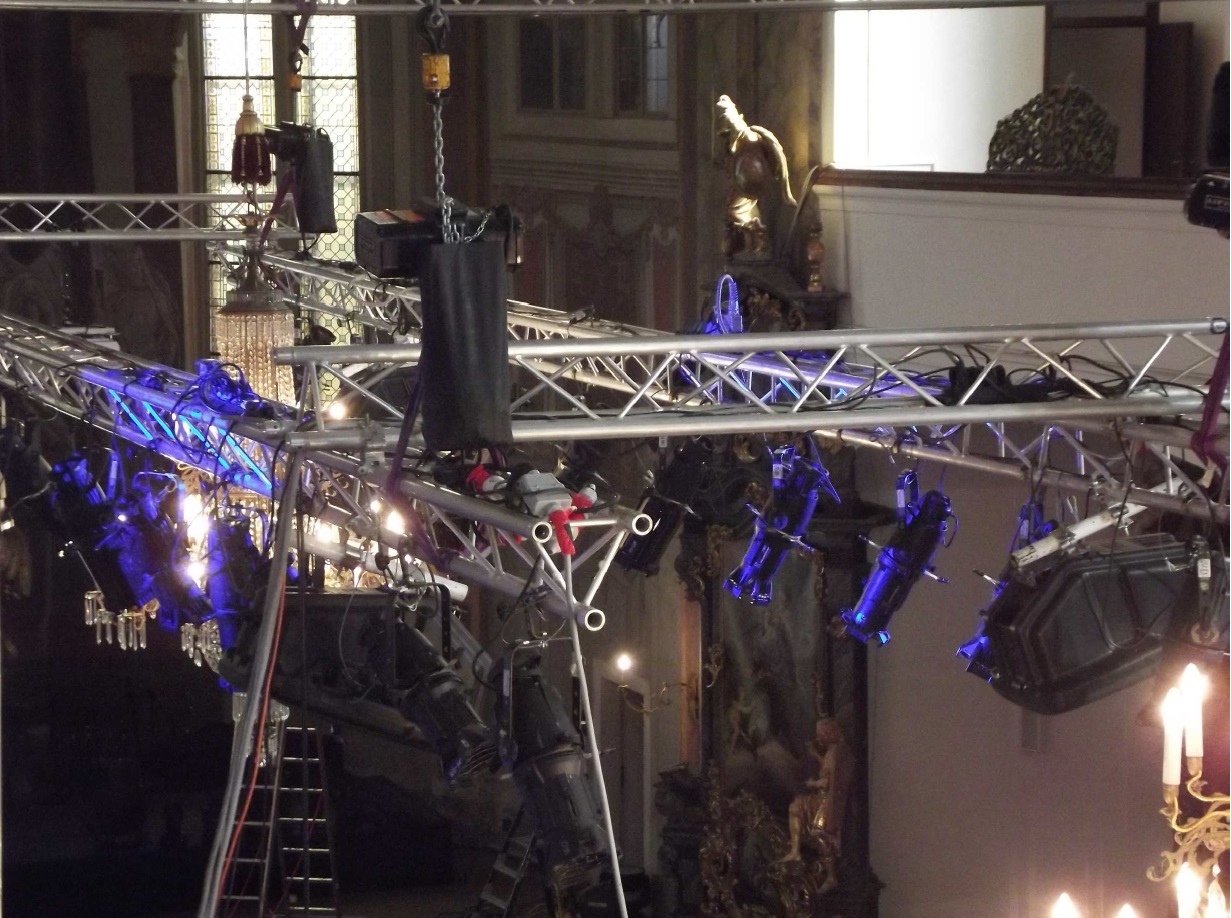
A truss construction.
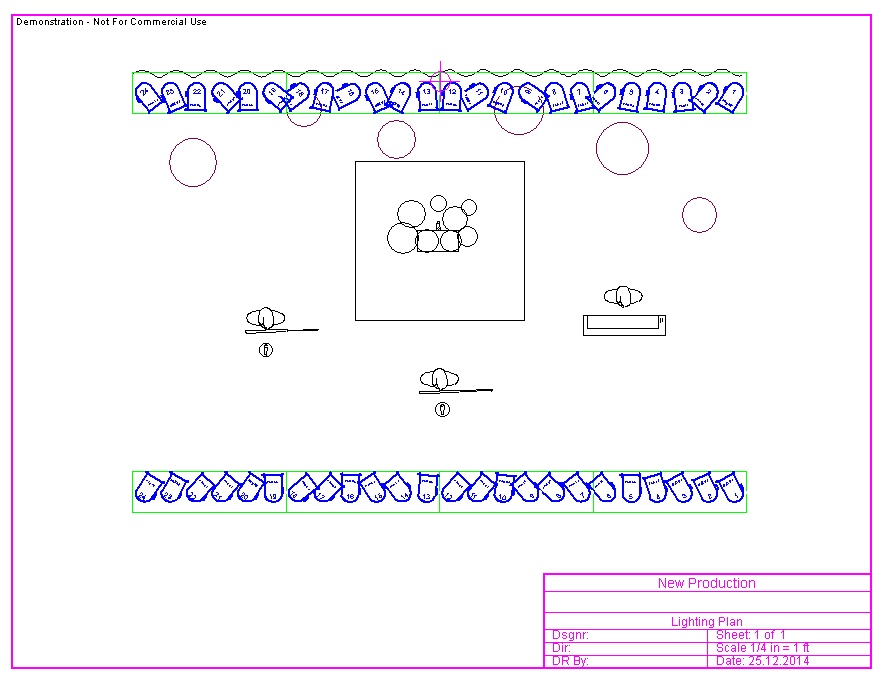
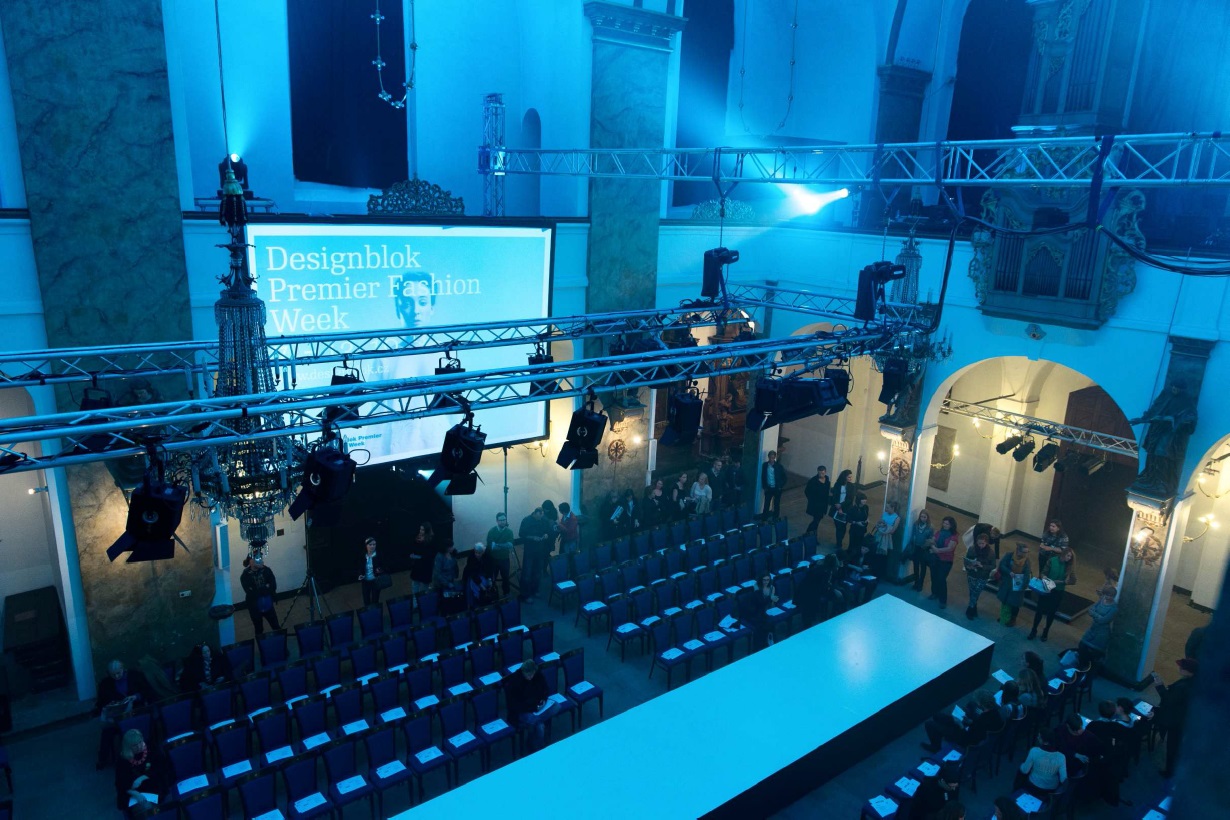
A light plot for a concert.
How to solve everything?
6.1 Rule N. 1
– to be prepared
Each performance has its specific technical requirements, to which one should comply as much as possible and that is sometimes impossible. Therefore it’s necessary to communicate in advance and eliminate possible problems. Something can be resolved with a compromise, but there may be situations where “there is no way of changing it.” It’s then on the production team (director, set designer, designers, and others) to decide whether it is possible play the performance with all the pitfalls in the given conditions. In addition, some performances may be intended as touring and they rely on simplicity already in their implementation and rehearsals (light in the scene and dark between scenes, a maximum of one to three lighting atmospheres) and that are possible to be performed even at a staging area with minimal equipment. Hardly any theater or theater group can afford to transport all the necessary lights and sound technology. Sometimes, however, the technology, which is a part of the set design, is being carried with (not just chandeliers and lamps, but spotlights built into the set, which cannot be replaced by the same type of spotlights from other manufacturers due to different dimensions, etc.).
It is necessary to know the equipment and space requirements for actual lighting of a performance in a different space. Some theaters offer a list of lighting equipment documentation on their websites.
6.2 Rule N. 2
– to know what I'm doing
A lighting electrician or lighting designer must have thorough knowledge of the performance to be able to imitate lighting arrangement in the way he did it at the premiere. There is a similar base of lighting positions in stone theater buildings and so it is possible to prepare the lighting technology almost in the same way, so everything is much simpler. If a larger number of lights is available in another space, half the battle is won and a possibility of a choice between them is almost luxury. However, the previous ” half the battle is won ” means that twice as many lights placed in inappropriate positions imply the need not only to think about which (position) and what kind (type) of lights would be employed most frequently, but also whether they can be replaced by other ones that are missing for the other cues. This is a question of focus – possible lighting with spotlights is better to be done more universally and some side lights to be expanded while maintaining the plasticity of the scene at the expense of accurate lighting. In the case of other types of units (e.g. PC versus PAR) at given positions compared to the domestic venue, it is necessary either to replace them (a question of available time), or simply to use them and count on their properties (e.g. for mentioned PC versus PAR, i.e. wider versus spot light beam, to consider the use of diffusion filters). Further complications may arise in the supply part where there may not be a sufficient number and power of dimmers. Higher number of units also does not mean that they all will be regulated individually, because they are can be “paired” (plugging in more units on one dimmer adequately to the power, which means the ability to regulate all of these lights only on one dimmer at the same intensity). Another time, pairing can be an advantage and so it can substitute a smaller number of circuits. One example: adjustable sockets on stage can sometimes be missing and then it is necessary to “pull down” circuits from lighting positions on the proscenium arch with extension cables, which means of course disconnection of some lights in the proscenium arch or reducing the possibility of regulation of the positions at the proscenium arch. If then the light technician decides to bring along his own lighting devices, he must think of the fact as well that he is going to need to plug them somewhere and control them – if he relies only on local technology. The solution is to bring your own dimmer units; then it is necessary the availability of connectivity beyond the existing power supply issue.
6.3 Rule N. 3
- position is the most important
In some theatre spaces, the lighting positions are so “conveniently” located that there is not good access to them and it is unrealistic to exchange them while maintaining at least the basic safety and set them for the needs of a performance. So installed units are therefore set in a general direction of lighting e.g. to the left section of the stage, to the middle and to the right of the stage etc., but in another way than it is convenient for the built set, so it can be used only with a certain compromise. Why it is so would be a story in itself. But in short, some architects simply do not have any experience with stage lighting, and so the light positions are made at the last moment during finishing of construction works. And no one thinks about the fact that it is going to be necessary to somehow get to them every day and operate with them. And when the bulb goes out? So one must wait for the next opportunity, such as theater holidays, to build a complex scaffolding and replace the bulb.
6.4 Rule N. 4
- Manage, control, regulate
Regarding control of lighting equipment, the solution is very simple in the present computer era. There are two variants that may occur. The first option is that the performance is built from lighting cues, which can be loaded to submasters, and one can achieve the desired lighting atmosphere by their manual combination. Then there is no need to solve the connection of units and numbers of dimmers at the other venue (patch), one just simply loads them to the submasters according to the need of the desired visual effect and it’s done. The second variant is based on programmed lighting cues. These consecutive cues include numbers of instruments and their intensity in a given cue, with respective time of a change between the cues. For easy performances, it can be programmed at the local lighting console, if it is enabled and doesn’t cause an unnecessary loss of time in preparation. For more complex performances, usually one’s own lighting console is brought (or computer lighting software), in which the lighting cues are already stored. Instruments have here their own specific numbers, channels. According to these numbers, documentation is written down (light plot) where there is information available not only about the position and direction of units, but of which the type it is, which filter is used and other configurations. Numbering of stage lighting instruments at another venue is different in dependence on the number of the local instruments or setting of the dimmer wiring. All would be renumbered at the local venue on the lighting control desk with the help of the patch function and in connection with the corresponding lighting. On the one hand, it saves the time with programming of the performance, on the other hand, it is good to go through the lighting cues and visually check that everything fits and there is no need to adjust at least the intensity – because of missing units, or just because the used lamps are farther, closer, higher, lower … Earlier, it used to be necessary to make paper conversion tables on the analog control desks to have the right light be cast into the given cue, or to make labels directly onto the control desks, where was written what kind of the unit it was.
6.5 Rule N. 5
- empathy, tolerance, trust
There were, are and always will be issues when transferring a performance into another venue. As one can see, sometimes there can be many problems to be resolved, and sometimes it’s just little things. Some companies appear periodically at some festivals or presenting theaters (theaters that don’t have their own company and only serve as a host venue). This is a huge advantage for both local as well as non-local theater technicians not only because they know each other, but also because of familiarity with the space and the equipment in the theater space. In order to transfer production and its performing, in which viewers are mainly interested in, with as few problems as possible, all of the team are required to have a fair amount of experience, to be familiar with the art of making compromises and a certain degree of improvisation. Sometimes, it is at the expense of one component of the performance, often it concerns precisely the lights that are not as perfect as they should be. This requires even mutual tolerance and patience, because it is not easy for anyone and problems are often multiplied by the wrong approach of the people.

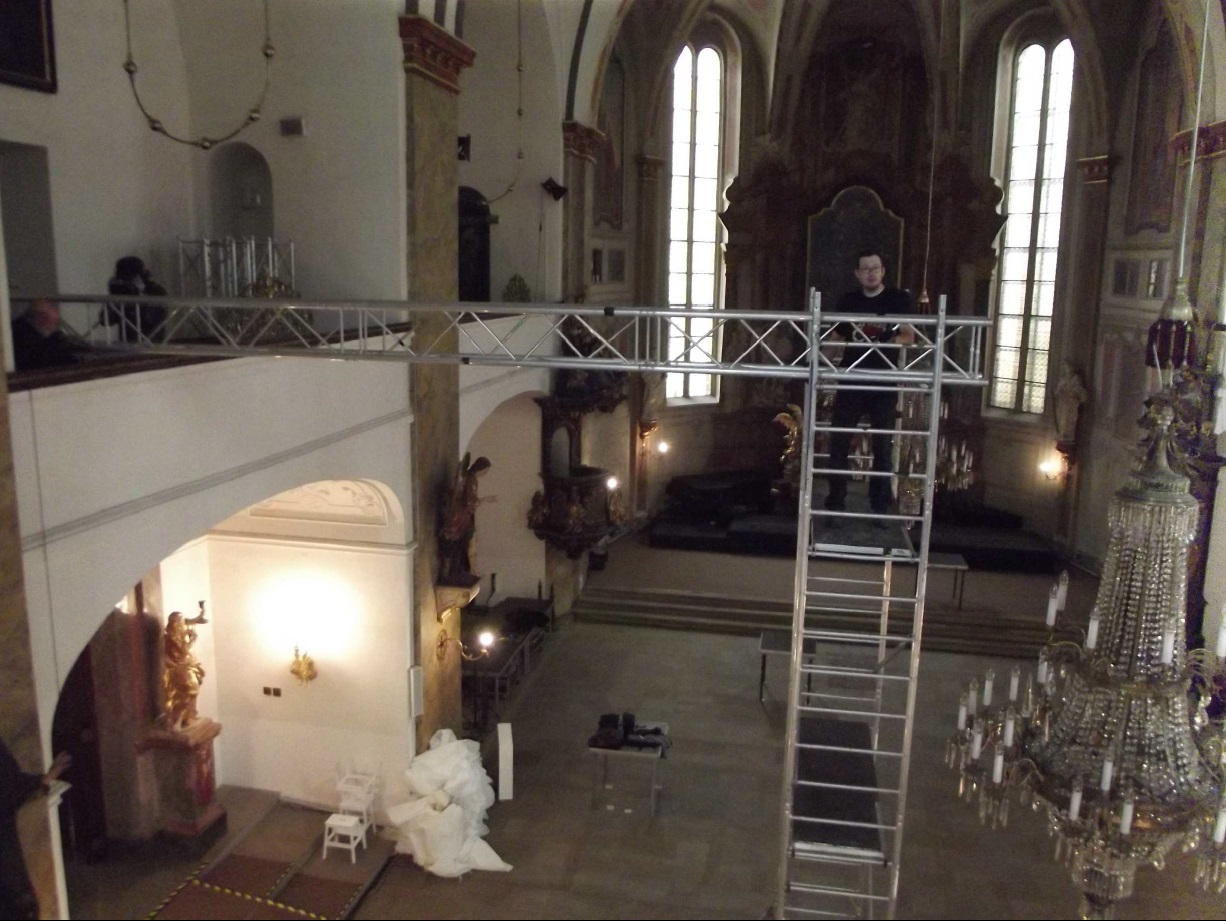
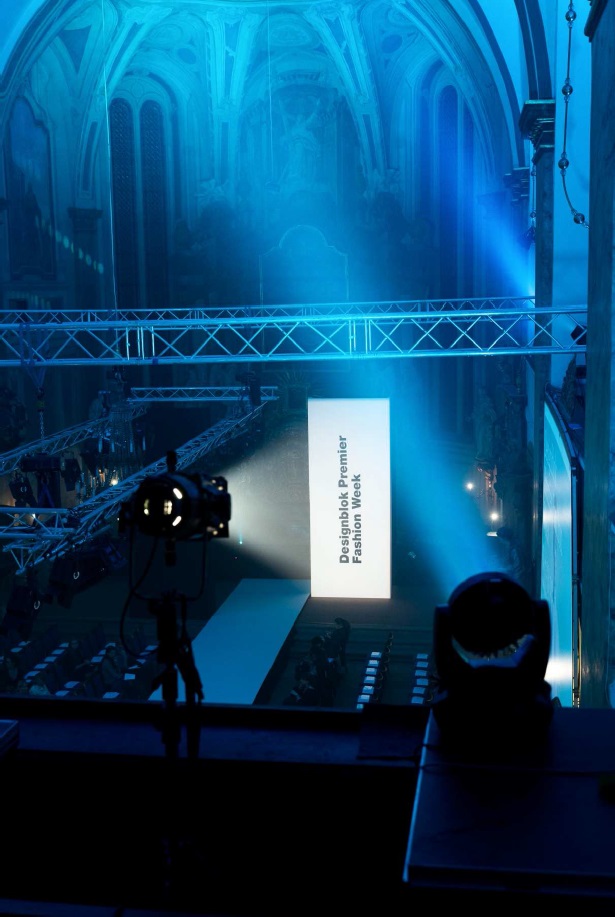
What sees a visitor when he enters.

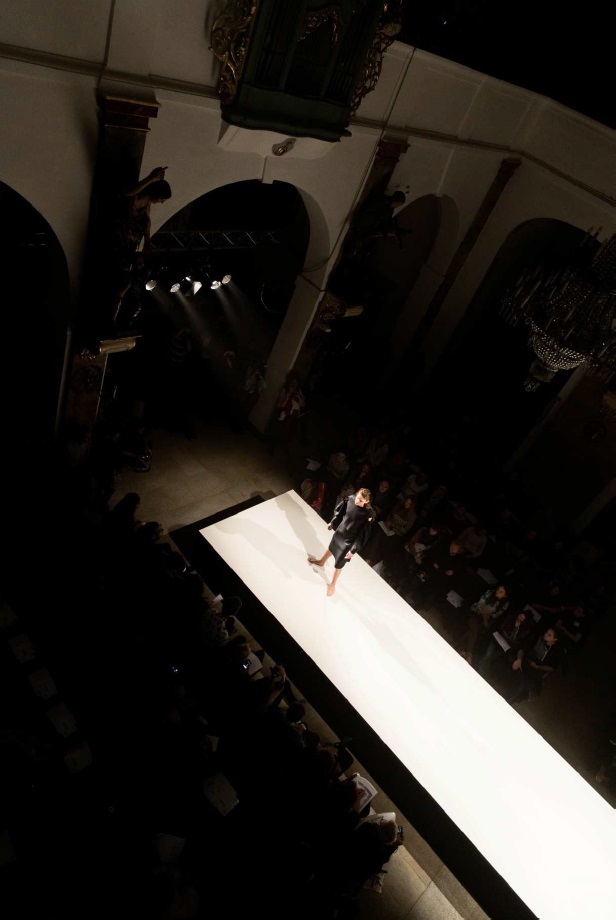
What sees a lighting designer when he enters.