
7. Color on the stage
All the things are actually black and white and their color is a result of reflection of light in combination with the composition of the surface. Therefore an object can have a different color when illuminated by a specific type of light.
When a colored object is lit, only a part of light is reflected and the rest of wavelengths is absorbed. The reflected wavelengths are the color we see. Let’s take a red box as an example. The box reflects only red section of the spectrum, while all other colors of the white light are absorbed. If then the very same red box would be lit by light with only a limited range of wavelengths as for instance blue is, because the box reflects only the red part of spectrum and absorbs all the other, it would appear to be black as reflecting no light at all.
Though fairly obvious, it is of great importance for lighting. Presume that we have a set which is dominantly red – using blue lighting will make it look very dark. It is great if intended but if not, some people (especially a set designer) might get very upset.
But as you may realize, it is not entirely true. A red object under blue light may appear black but it may also appear dark red or blue. How does this happen?
It all depends on two factors.
Firstly: nature of the surface (or its pigment). What looks red under white light still can have the ability to reflect blue (or orange) wavelengths of light, although its ability to reflect the red part of the spectrum is much bigger.
Secondly: spectral composition of the light. Light which appears to be blue on white surface might be composed of different wavelengths although the blue prevails.
This seems to be really disappointing as it now seems that there are no rules for reflecting colors. BUT: Have a look on the picture of the visible spectrum with the traditional seven colors assigned (red orange yellow green blue indigo violet) and remember that:

Firstly: it is quite safe to presume that colored light will not affect surfaces of colors, which aren’t directly nearby.
Secondly: the more the color looks to be composed of some others – like bluegren, magenta, pink etc, the differently it will reflect or be reflected.

A simplified model: Magenta light on red surface. What color does a red object assume with a magenta light being cast onto it? Red reflects red and absorbs green and blue. Magenta light is composed of red and blue light. So the red object will reflect the red light and absorb the blue. It will appear red.

Black absorbs almost all the light.

White surface reflects all the light.

Blue surface.
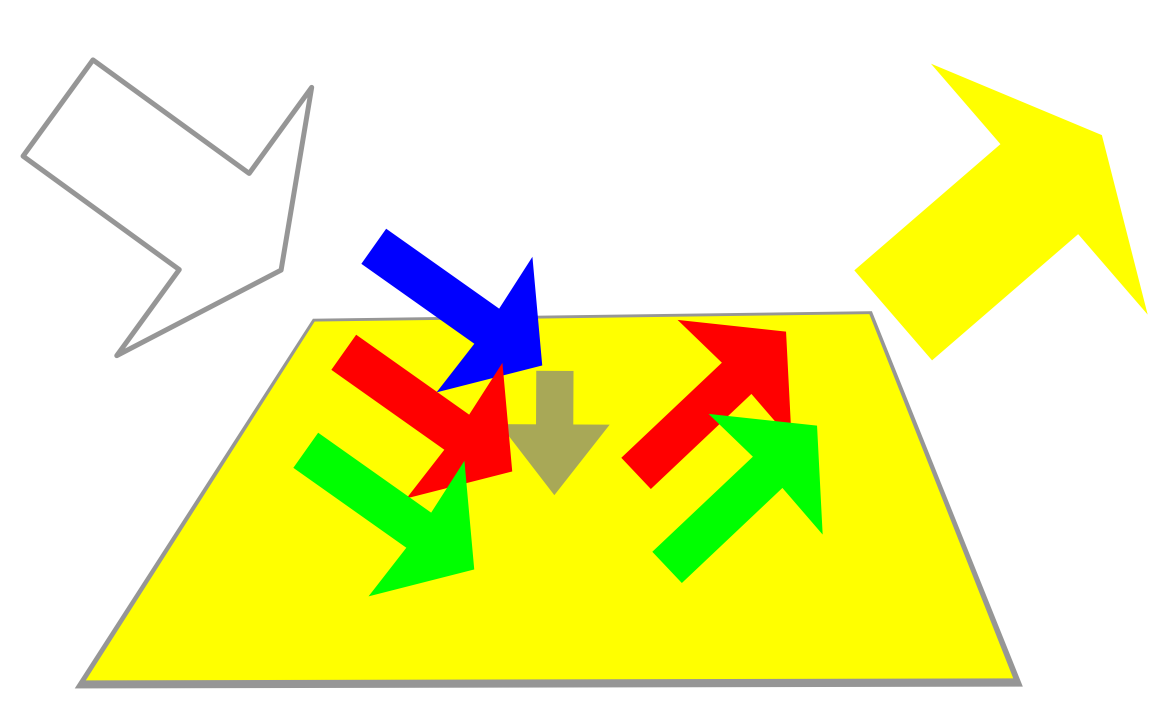
Yellow absorbs blue.

A simplified model: Cyan surface under magenta light. Cyan reflects green and blue and absorbs red. So the object will absorb the red from the magenta and reflect the blue: the object will appear to be blue.
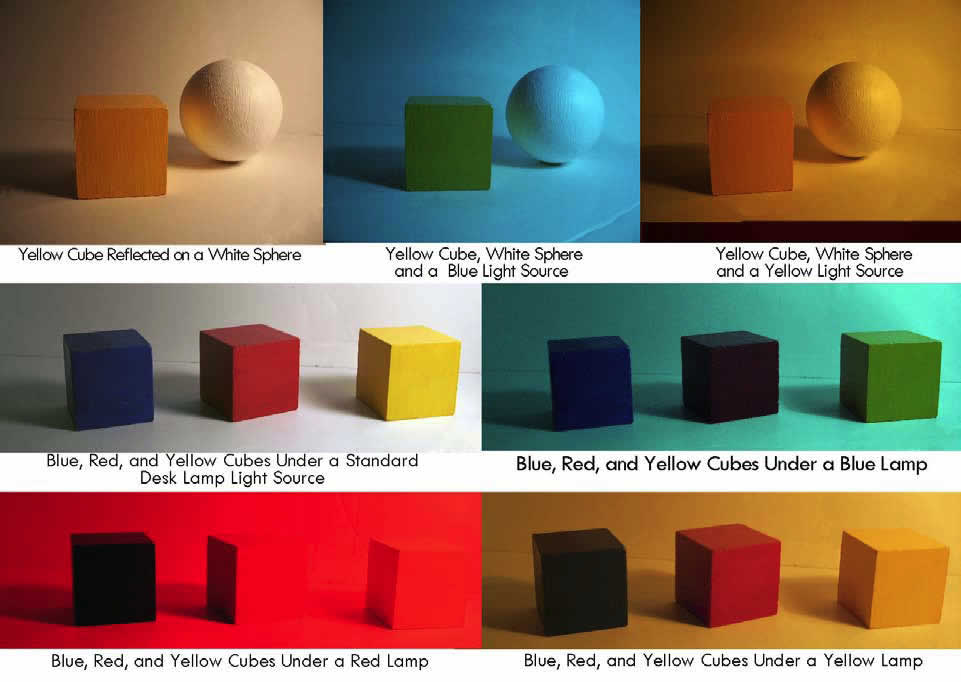
What would happen, when only some parts of light are present, that is, if the light is colored?
-

- a yellow sphere under white light
-

- blue light on yellow surface
-

- yellow sphere in red light
-

- blue sphere under white light
-

- blue sphere under red light
-

- blue sphere under yellow light
-

- A red object in white light
-

- A red sphere illuminated by a green light seems to be black
-

- A red sphere illuminated by a blue light seems to be black.
-

- red and green on red
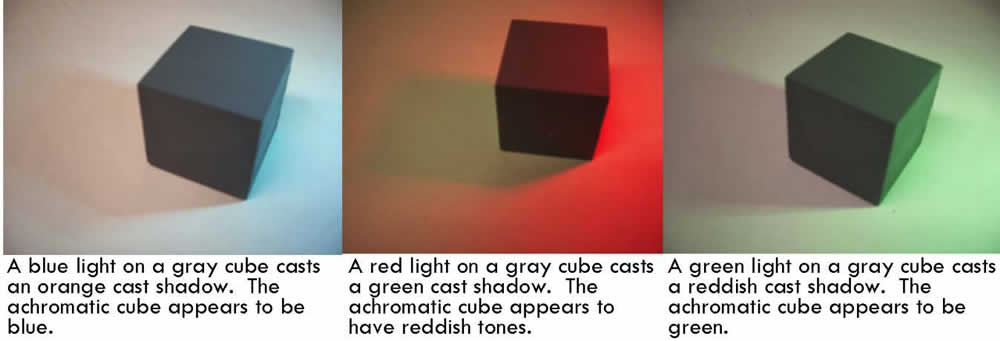
Perception of color depends not only on the color of the object, but on the color and intensity of the light that is cast onto it.